

What heat actually does to you
Sit in a room at 80–100°C and your body starts solving a problem. Core temperature rises. Blood vessels near the skin open up so heat can escape. Heart rate climbs — often into the range you’d see during light-to-moderate exercise. Sweat glands open. Blood volume shifts toward the skin and away from the core.
That last part matters more than it sounds. Your heart is pumping harder against less resistance, moving more blood per minute, while your legs sit still. This is why sauna gets described as passive cardio — the cardiovascular system is loaded, the musculoskeletal system isn’t.
Do it repeatedly and the body adapts. This is called heat acclimation, and it’s measurable: resting core temperature drops, you start sweating earlier and more efficiently, and the sodium concentration of your sweat falls. Plasma volume expands. A 2024 randomized trial in adults with coronary artery disease confirmed those adaptations after eight weeks of sauna use — reduced resting core temperature and improved sweating capacity (Journal of Applied Physiology).
Heat acclimation is a real, reproducible physiological change. Whether it translates into the health outcomes people hope for is the subject of most of the sections below.

Where nearly all of this research comes from
Almost every sauna headline you have ever read traces back to one dataset: the Kuopio Ischaemic Heart Disease Risk Factor Study, run out of eastern Finland. Middle-aged men, recruited between 1984 and 1989, followed for two decades and counting. Same cohort, many papers — heart disease, stroke, dementia, pneumonia, COPD.
Two things about it are worth knowing before you read any number in this article.
The comparison group was not non-users. In the mortality analyses, people using a sauna four to seven times a week were compared against people using one once a week (JAMA Internal Medicine, 2015). Nobody in the study was sauna-naive. When you read “40% lower mortality,” that is against a baseline of weekly sauna, not against zero.
It’s observational. These are people who chose their own sauna habits, not people randomly assigned to them. Writing in Neurology, Dippel and colleagues argued that people who differ in sauna frequency likely differ in unmeasured ways too — and that a habit appearing to protect against a very wide range of unrelated conditions is itself worth pausing on (Neurology reader response).
The researchers agree on the limits. In their own 2023 review, Kunutsor and Laukkanen write that definitive randomized trials of sauna are very few, and that residual confounding, reverse causation, and inability to prove causation all apply (Mayo Clinic Proceedings, 2023, open access).
Finland is also a place where sauna is culturally universal and physically accessible — a home, a gym, an apartment block. Using one five times a week there says something different than it would elsewhere.
Mortality and cardiovascular death
The headline study followed 2,315 Finnish men aged 42–60 for a median of 20.7 years. Over that period there were 190 sudden cardiac deaths, 281 fatal coronary heart disease events, 407 fatal cardiovascular events, and 929 deaths from any cause. Both frequency and session duration were inversely associated with all four outcomes (JAMA Internal Medicine, 2015).
A 2018 follow-up widened it to 1,688 participants, mean age 63, and — importantly — 51.4% women. The cardiovascular mortality rates came out at 10.1 per 1,000 person-years for one session a week, 7.6 for two to three, and 2.7 for four to seven. After adjusting for established cardiovascular risk factors, physical activity, and socioeconomic status, the hazard ratio for the most frequent group versus the once-weekly group was 0.23, with a confidence interval running from 0.08 to 0.65. The risk curve was linear, with no threshold (BMC Medicine, 2018, full text free).
That confidence interval is wide because the four-to-seven group is small. The direction is consistent across every analysis of this cohort.
Blood pressure
Blood pressure rises during a session — the heart is working. What people care about is what happens over weeks.
In the Finnish cohort, frequent sauna bathing was associated with lower incident hypertension, and a later analysis looked specifically at whether frequent use was associated with lower cardiovascular mortality among men who already had elevated systolic pressure (Kuopio interaction analysis).
The randomized picture is more specific about conditions. A systematic review cited within the 2022 trial below reported that heat therapy reduced both systolic and diastolic pressure by an average of about 4 mmHg compared to controls. In the 2022 trial itself, exercise alone produced no blood pressure difference versus control over eight weeks — but exercise plusa post-workout sauna lowered systolic pressure by 8.0 mmHg compared to exercise alone, with a confidence interval of −14.6 to −1.4 (American Journal of Physiology, 2022).
Meanwhile, a 2025 meta-analysis of 20 randomized passive-heating trials found no significant pooled effect on a long list of cardiometabolic and vascular markers (ScienceDirect, 2025).
Three different study designs, three different answers. All three are linked.
Stroke and blood clots
From the same Finnish cohort: frequent sauna bathing was associated with reduced stroke risk in men and women (Neurology, 2018 — the reader-response exchange on this paper is the healthy-user-bias discussion referenced above and is worth reading alongside it).
A separate analysis found an association with reduced risk of venous thromboembolism — blood clots in the veins (European Journal of Epidemiology, 2019, cited within).
What happened when researchers ran actual trials
This section exists because it’s almost never covered, and it’s where the sauna literature gets genuinely interesting.
A 2025 systematic review and meta-analysis searched through November 2024 and pooled 20 randomized controlled trials of passive heating — hot water bathing, saunas, hot yoga, local heating — running from two to fifteen weeks. It found no significant pooled effects for the majority of outcomes measured: flow-mediated dilation, pulse wave velocity, resting heart rate, heart rate variability, fasting glucose, HbA1c, total, HDL and LDL cholesterol, triglycerides, and C-reactive protein (ScienceDirect).
A 2024 randomized trialput adults with stable coronary artery disease through eight weeks of unsupervised Finnish sauna bathing. Heat acclimation clearly happened — resting core temperature fell, sweating capacity improved. Endothelial function, microvascular function, arterial stiffness, and blood pressure did not change (Journal of Applied Physiology).
The body adapted to the heat. The vascular markers everyone assumes are the mechanism stayed where they were.
Dementia and Alzheimer’s
Same 2,315 men, same median 20.7-year follow-up. 204 diagnoses of dementia and 123 of Alzheimer’s disease occurred. Men using a sauna four to seven times a week had 66% lower dementia risk and 65% lower Alzheimer’s risk than men using one once a week (Age and Ageing, 2017).
Laukkanen, who led the work, has said the mechanism is not established, and pointed to cardiovascular health affecting the brain, plus the relaxation of the experience itself, as candidate explanations (University of Eastern Finland statement).
This is the same cohort as the heart findings above. It is one group of men measured for a second outcome — not independent confirmation.
Depression and mood
This turned out to be a more serious research area than the sauna’s wellness-industry reputation suggests, and the studies are mostly not about saunas as such — they’re about whole-body hyperthermia, deliberately raising core temperature to around 38.5°C.
A 2016 randomized, double-blind, sham-controlled trial in JAMA Psychiatry found that a single whole-body hyperthermia session produced a rapid and sustained antidepressant effect in participants with major depressive disorder. More recent work at UCSF has combined infrared hyperthermia with cognitive behavioural therapy (overview of this line of research — note this source is a sauna retailer’s newsletter; the underlying trials are the thing worth chasing).
The one randomized trial using an actual sauna protocol for depression is older and small: Masuda and colleagues, 2005, randomized 28 people with mild depression and somatic symptoms to four weeks of infrared sauna at 60°C for 15 minutes, five times weekly, versus bed rest (summarised here).
Proposed mechanisms in this literature include serotonin and beta-endorphin release and reductions in inflammatory markers. A 2026 review argues the mental-health case deserves proper randomized trials with standardized protocols, which do not yet exist (PMC).
Worth noting for anyone reading this because of their own mood: these are trials of a specific medical protocol, and nothing here is a substitute for treatment.
Sleep
The hard data here is thinner than the topic’s popularity suggests, and we’re including it anyway so you know where the edge is.
The proposed mechanism is straightforward and comes from ordinary sleep physiology: falling asleep requires core temperature to drop. Heating yourself and then cooling down produces a steeper drop than happens on its own, which theoretically strengthens the sleep signal. The same logic underlies the more-studied hot-bath-before-bed research.
What actually exists in the sauna literature is mostly self-report. The Global Sauna Survey — 482 respondents, most bathing one to two times a week — collected perceived improvements in sleep, stress relief, and quality of life among reasons people sauna (survey overview). Reviews on sauna and mental health list improved sleep quality among reported effects (PMC, 2026).
Objective sleep measurement — actigraphy, polysomnography — in response to a sauna protocol is not something we could find in this pass. If you use a sleep tracker, you are in a decent position to run this experiment on yourself, which is more than most people can say about most claims.
Colds, pneumonia, and respiratory infection
This is a bigger evidence area than most sauna coverage suggests.
The oldest piece is a small controlled study: 25 people saunaing one to two times a week for six months versus 25 controls, with fewer colds in the sauna group — and notably, the protective effect took about three months to appear. In the same work, once a cold was caught, it ran a similar course either way (summary and discussion).
From the Finnish cohort: men bathing two to three times weekly had 27% lower risk of respiratory disease overall, and four or more times weekly, 41% lower (analysis summary). A 2023 prospective study specifically on chronic obstructive pulmonary disease found frequency of sauna bathing inversely associated with incident COPD, while duration of a single session showed no association — suggesting sessions per week matters more than minutes per session (European Journal of Clinical Investigation, 2023).
White blood cell counts — lymphocytes, neutrophils, basophils — rise after sauna use in both athletes and non-athletes (overview).
Asthma and lung function
Sauna bathing has been reported to relieve symptoms of bronchial asthma, which seems strange at first — hot dry air is not what most asthmatics are told to seek out.
The American Journal of Medicineworked through the apparent contradiction. Finnish sauna air sits at 80–100°C with 10–20% relative humidity. Because relative humidity is measured against temperature, that very hot air at low relative humidity carries a high absolutewater content — considerably more water per unit of air than cool room air. The distinction between relative and absolute humidity resolves the puzzle (American Journal of Medicine).
Waon therapy — far-infrared sauna at around 60°C — has been studied for improving lung function in COPD (overview).
Sauna and exercise together
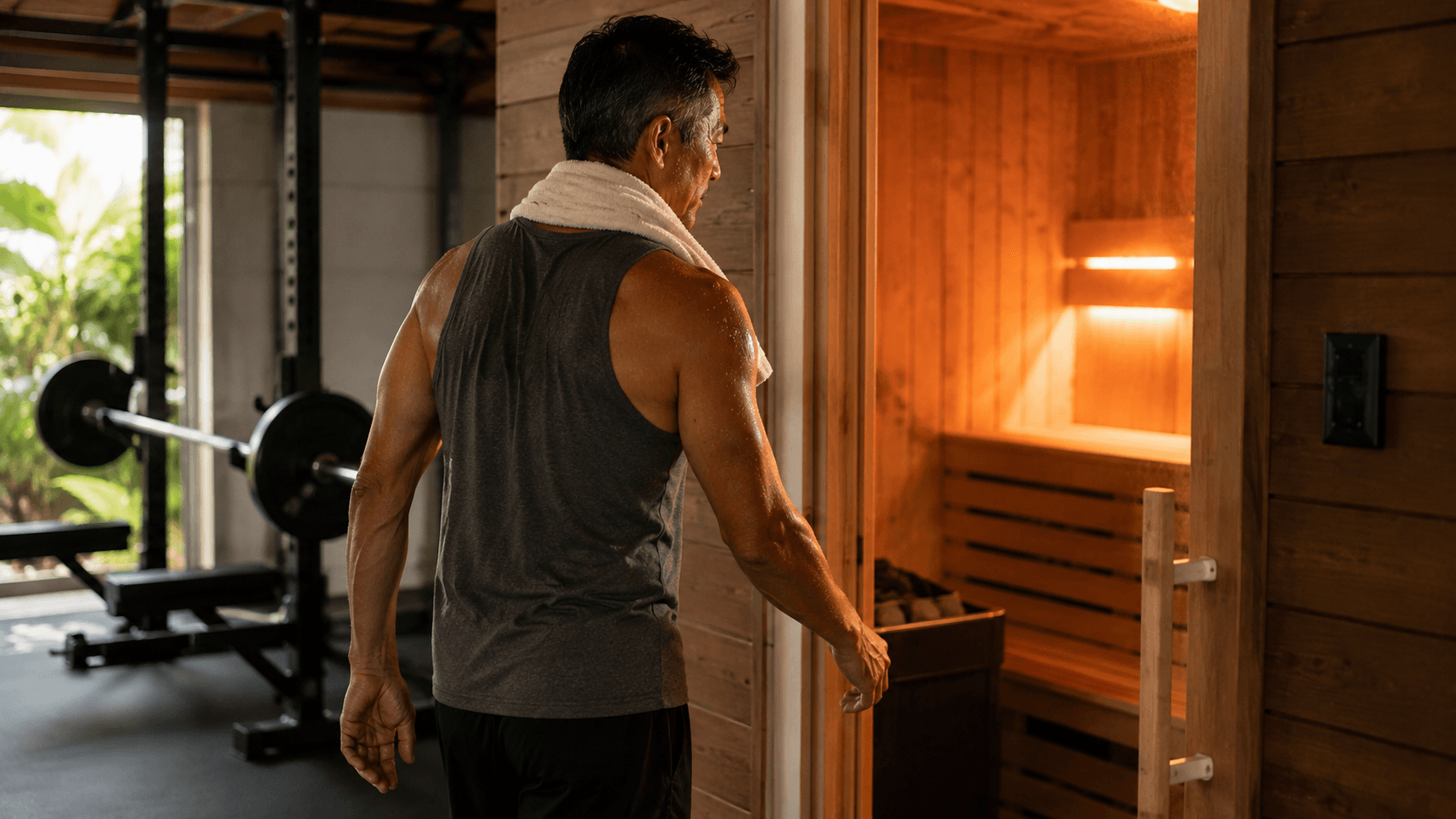
A 2022 multi-arm randomized trial took 47 adults, mean age 49, all with low physical activity and at least one traditional cardiovascular risk factor, and split them three ways for eight weeks: guideline-based exercise plus a 15-minute post-exercise sauna, guideline-based exercise alone, or control.
Against control, exercise alone improved cardiorespiratory fitness by 6.2 mL/kg/min (CI +4.2 to +8.3) and improved fat mass, with no blood pressure change.
Against exercise alone, exercise plus saunaimproved fitness by a further 2.7 mL/kg/min (CI +0.2 to +5.3), lowered systolic blood pressure by 8.0 mmHg (CI −14.6 to −1.4), and lowered total cholesterol (American Journal of Physiology, 2022; abstract).
The authors note the dose-response relationship — how long, how often — has not been established.
In the Finnish cohort, sauna and physical activity appear to stack in the same direction: the protective association with pneumonia was strongest in men who had both high cardiorespiratory fitness and frequent sauna habits, at 38% lower risk than men with low fitness and infrequent use (analysis).
Recovery and soreness
A 2025 systematic review in Sports Medicine – Openlooked specifically at post-exercise whole-body heat exposure — sauna or hot water immersion — against passive or placebo recovery. Fourteen studies, 194 participants total. Nine studied acute effects: four found no effect, four found benefit, one found harm. Five were long-term training interventions, and those suggested post-exercise heating may improve running performance, at least in hot conditions, while showing no effect on cycling performance or VO2max. Evidence quality was rated low to moderate, and the study designs varied too much to pool (Sports Medicine – Open, 2025, open access).
A 2026 Bayesian meta-analysis looked at heat applied shortly after resistance training across six studies. For hypertrophy, the between-group effect was 0.12 with a credible interval of −0.09 to 0.31, and an 89.7% posterior probability the effect was above zero. For strength, the effect was −0.05 with a credible interval of −0.28 to 0.19 (SportRxiv preprint — note this is a preprint, not yet peer-reviewed).
More on what recovery actually involves: Recovery Isn’t Just Rest
Endurance and heat acclimation
Heat acclimation expands plasma volume, and plasma volume expansion increases stroke volume — more blood moved per beat. That’s the mechanism endurance athletes are after, and it’s the same adaptation altitude training targets from a different direction.
A study of elite cross-country skiers examined medium-term sauna-based heat acclimation and found a moderate decrease in physiological strain index and modifications in plasma volume restoration during exercise in temperate conditions, while reporting only weak influence on body temperatures. The authors also noted marked individual variation — apparent responders and non-responders (PMC).
A 2007 study of competitive male runners looked at post-exercise sauna bathing and endurance performance (abstract), and there is a 2021 paper on sex differences in adaptation to intermittent post-exercise sauna in trained middle-distance runners (Sports Medicine – Open).
A note on sourcing here: this is the section where the internet is most saturated with sauna retailers citing each other. Claims of “6–8% performance improvement in hot conditions” circulate widely on commercial sites without traceable primary sources. The peer-reviewed papers above are linked directly.
Hormones, growth hormone, and muscle
Including this section because the claims are everywhere and almost nobody explains what they’re actually based on.
What gets claimed: that sauna use spikes growth hormone, raises testosterone, increases heat shock protein expression that protects muscle from breakdown, and therefore supports muscle growth. You’ll see specific figures — HSP72 expression tripling after 30 minutes at 73°C, for example.
What we found chasing these: the growth hormone and muscle claims are circulated almost entirely by sauna manufacturers and supplement retailers (example, example). The heat shock protein biology is real and appears in peer-reviewed work as a proposed mechanism for cellular protection under thermal stress (review). Whether that translates into measurable muscle outcomes in humans is what the resistance-training meta-analysis above tried to answer, and its numbers are in the recovery section.
An academic overview covering fitness applications of sauna is available in full (International Journal of Allied Health Sciences and Practice).
If you want to test this on yourself, it’s cheap to try and easy to track.
Kidneys, hydration, and electrolytes
Heavy sweating without matching replacement drops blood volume. The kidneys respond by conserving — reducing urine output, retaining sodium and water, cutting renal blood flow. That’s a normal compensatory response. Do it repeatedly without replacing what you lost and the compensation becomes the problem.
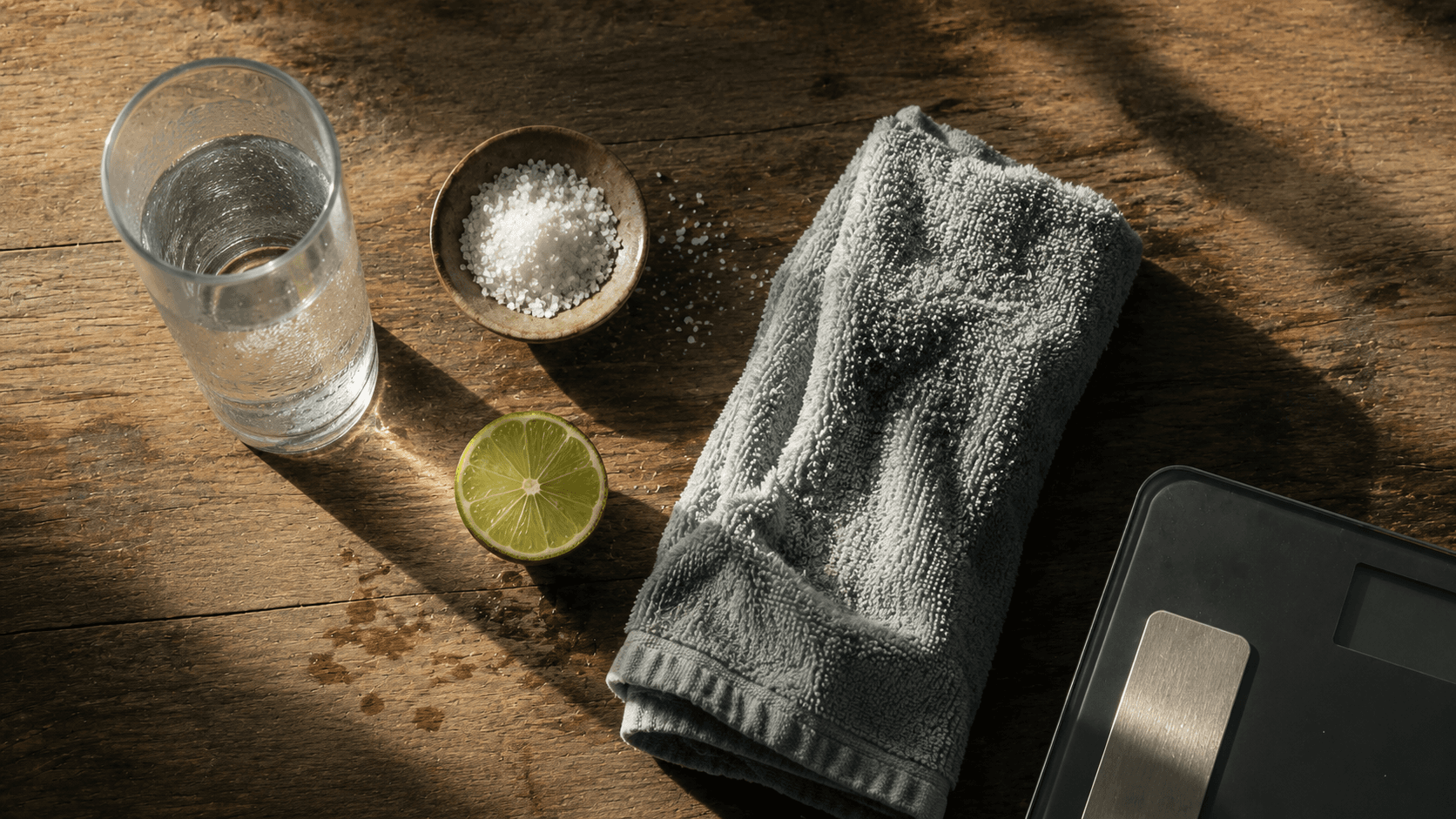
The numbers: a typical sauna session costs roughly 0.5–1.0 kg of fluid, and sweat contains somewhere around 800–1,200 mg of sodium per litre — roughly a gram of salt per litre of sweat. Potassium and magnesium go too, in much smaller amounts, which is why sodium is usually the first replacement priority (overview).
The best physiological data we found on this actually comes from a hot yoga study rather than a sauna study. Researchers measured sweat at 82 ± 16 mmol/L of sodium chloride, totalling an estimated 6.8 ± 2.1 g of sodium chloride lost per session. Serum aldosterone rose 3.5-fold. The extracellular fluid compartment dropped 9.7%. The authors describe the result as volume depletion rather than dehydration of body fluids — a meaningful distinction, because it means you lost salt water, not just water (Physiological Reports).
That distinction is the whole point of this section. If what you lost was salt water and what you replace is plain water, you dilute what’s left. That’s the mechanism behind hyponatremia — low blood sodium — and its symptoms run from nausea and headache to confusion.
Older adults have additional reasons to pay attention here: reduced thirst sensation, changes in kidney function affecting fluid regulation, and common medications like diuretics and blood pressure drugs that alter the picture.
Heat acclimation helps over time. Acclimated people excrete less sodium in their sweat than unacclimated people — the body gets better at holding onto it.
Sourcing note:this area is dominated by companies selling electrolyte products, and we’ve linked the physiological studies rather than the marketing wherever both existed. If you use a sauna frequently and want to know what your own numbers are doing, that’s a blood panel, not an article.
Weight loss and “detox”
Weight lost in a sauna is water. It returns when you rehydrate. No source we found claims otherwise.
The detox claim is more interesting because it’s stated so confidently and so often. Sweat does contain trace heavy metals. One small clinical study with 12 participants compared vigorous exercise against static sauna exposure for removing nickel, lead, copper, and arsenic through sweat, and found exercise more effective (discussion).
Beyond trace metals, we went looking for research showing that sweating clears toxins in any clinically meaningful way and did not find it. Your liver and kidneys do that work.
Joints, arthritis, and chronic pain
This is where infrared sauna has evidence that traditional sauna doesn’t. Waon therapy — standardized far-infrared protocols at around 60°C — has been studied in randomized and controlled designs for chronic fatigue syndrome and fibromyalgia, alongside chronic heart failure (evidence comparison).
A widely-cited 2001 review reported that sauna bathing may alleviate pain and improve joint mobility in patients with rheumatic disease (Benefits and risks of sauna bathing).
Pain relief also comes up consistently as a reason people give for sauna use in survey data.
Related: When Protection Stays Switched On
Skin
Short section, because there isn’t much.
The 2001 review found sauna bathing does not dry the skin, and may benefit people with psoriasis — while noting that sweating can increase itching in people with atopic dermatitis. Same activity, opposite directions depending on the condition (Benefits and risks of sauna bathing).
How hot, how long, how often
What the research actually used: traditional Finnish sauna at 80–100°C (176–212°F), 10–20% relative humidity. Sessions in the Finnish cohort averaged around 15 minutes. The 2022 exercise trial used exactly 15 minutes post-workout.
On frequency versus duration, the COPD study found frequency of sessions per week associated with outcomes while duration of a single session showed no association — consistent with how other outcomes in this cohort have behaved (European Journal of Clinical Investigation). The mortality data showed a linear relationship with no threshold from one to seven sessions weekly (BMC Medicine).
For people with heart disease specifically, Brown University Health suggests capping sessions at 20 minutes, not exceeding 212°F or 20% humidity, staying hydrated, and avoiding alcohol before or immediately after (Brown University Health). Contraindications named consistently across sources are unstable angina, recent heart attack, and severe aortic stenosis.
Alcohol before a sauna is the one thing every source we read agrees on independently.
Infrared protocols run differently: lower temperature, around 45–60°C, with correspondingly longer sessions — often 25–45 minutes, and daily in some clinical protocols.
Starting out, sessions well under the 15–20 minutes used in research are the norm.
Infrared vs traditional vs steam
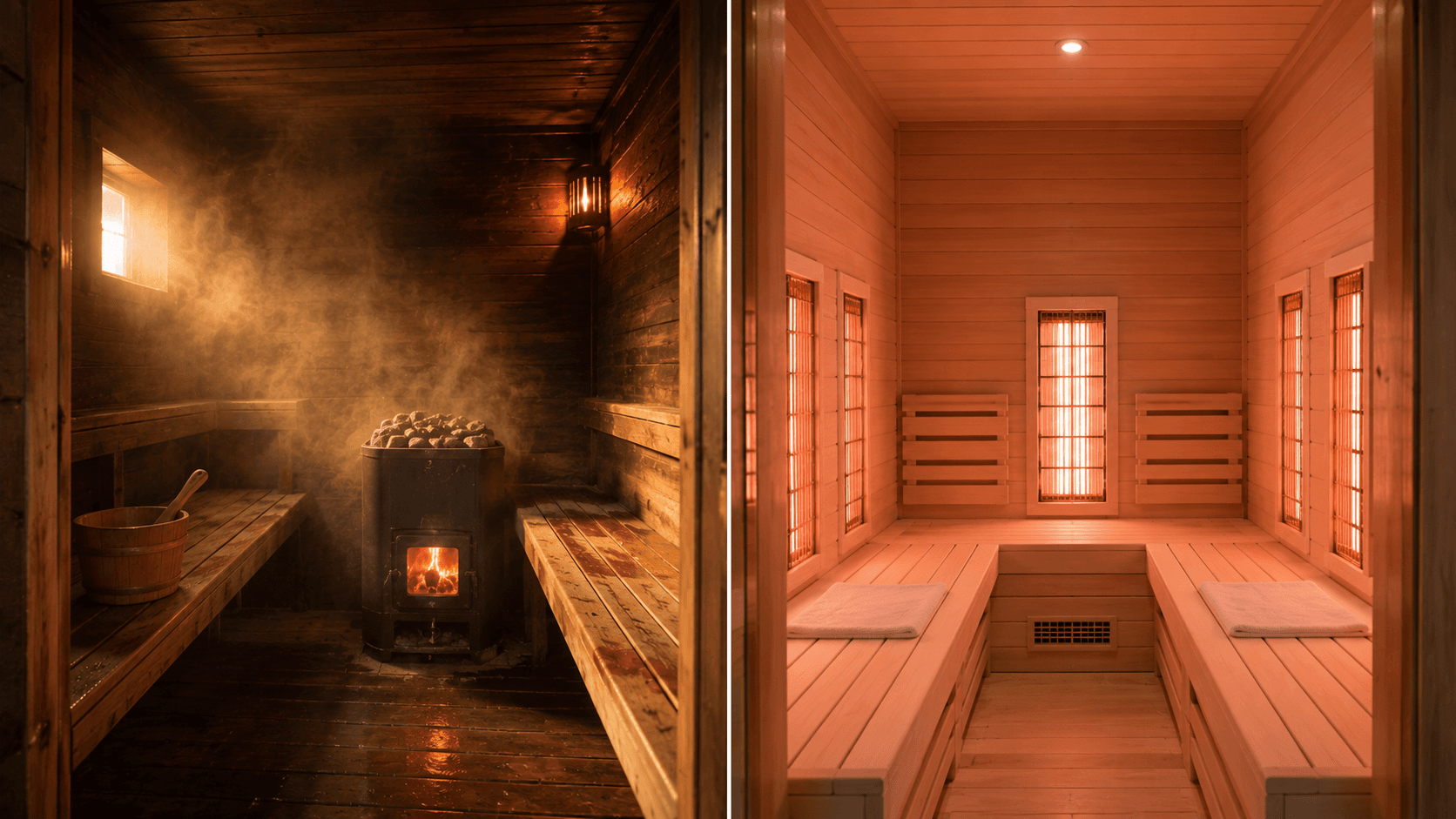
A traditional sauna heats the air, and you heat up from the outside in. An infrared sauna emits radiation your skin and tissue absorb directly, while the air stays much cooler — roughly 45–60°C versus 80–100°C.
The evidence bases are separate, and this is the single most useful thing to understand about the topic:
Traditionalholds essentially all the long-term population data — cardiovascular disease, all-cause mortality, hypertension, stroke, dementia. All of it comes from Finnish cohorts using traditional saunas at high temperature (comparison).
Infraredholds the condition-specific trial evidence, largely via standardized Waon therapy protocols at 60°C, studied in randomized and controlled designs for chronic heart failure, chronic fatigue syndrome, and fibromyalgia. The depression trial mentioned earlier also used infrared.
Whether lower-temperature infrared exposure produces the same long-term outcomes as high-temperature traditional exposure has not been tested. Extrapolating from one to the other is extrapolation.
Practical differences: a traditional heater typically draws around 6 kW and needs preheating; infrared draws roughly 1–2 kW (comparison).
The cold plunge afterward
Contrast therapy — hot then cold — is currently everywhere. One specific finding is worth knowing before you build it into a routine.
Brown University Health advises people with heart disease not to immerse in ice water or a cold pool after a sauna, because the sudden stress can trigger arrhythmia or blood pressure instability (Brown University Health). The American College of Cardiology’s commentary on the Finnish mortality data made a similar point: adverse cardiac events in heart patients are particularly associated with sudden cold water immersion following heat (ACC Journal Scan).
Worth noting that the Finnish cohort data was collected in a culture where cold immersion after sauna is common practice.
Building or buying one
Power draw is the main practical difference: roughly 6 kW for a traditional electric heater versus 1–2 kW for infrared panels, plus preheating time for traditional (comparison).
Traditional sessions tend to be social and done in rounds. Infrared sessions run longer and are typically solitary.
If your interest is the outcomes in the cardiovascular and mortality sections, the research those came from used traditional high-temperature saunas. If your interest is the conditions in the pain and heart failure trials, those used infrared at 60°C. The equipment question follows from which body of evidence you’re chasing.
What was measured in men only
Worth stating plainly rather than scattering it through the article.
The foundational mortality study: 2,315 middle-aged Finnish men (JAMA Internal Medicine, 2015). The dementia study: the same 2,315 men (Age and Ageing, 2017). The COPD study: Finnish men (EJCI, 2023).
The 2018 cardiovascular mortality analysis is the main exception, with 1,688 participants of whom 51.4% were women — and it found the association held in both (BMC Medicine, 2018). The stroke analysis also included women.
There is a 2021 paper on sex differences in adaptation to post-exercise sauna in trained middle-distance runners (Sports Medicine – Open).
Try This
The experiment: if you already train and have sauna access, move the sauna to afterthe workout for a month — 15 minutes, following a session you’d have done anyway. That’s the protocol from the 2022 trial, and it’s the only sauna arrangement that beat a control condition on fitness and blood pressure in a randomized design.
Track:resting heart rate on waking, and your weight before and after a session. The weight difference is your fluid loss for that session — roughly a gram of salt per litre went with it.
What a month looks like:the trial ran eight weeks and its fitness advantage over exercise alone was 2.7 mL/kg/min with a confidence interval that came close to zero. A month tells you whether the habit sticks. It won’t tell you whether it worked.