
The Flood Is Coming
There’s an old story about a man caught in a flood.
The water’s rising and a car pulls up to his door. Get in. He says no — Jesus will save me.
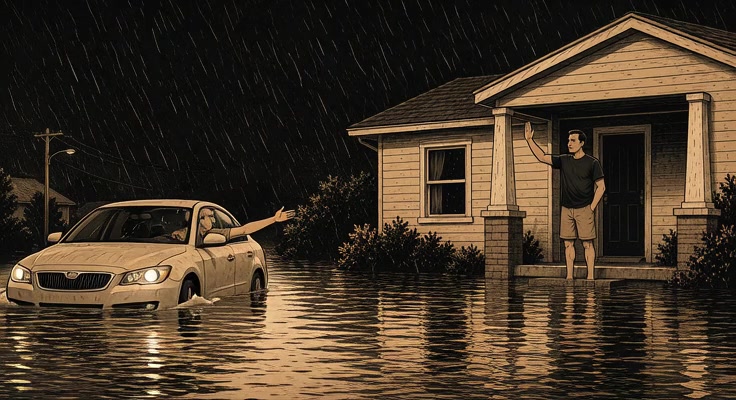
The water keeps coming and a boat rows past. Get in. No. Jesus will save me.
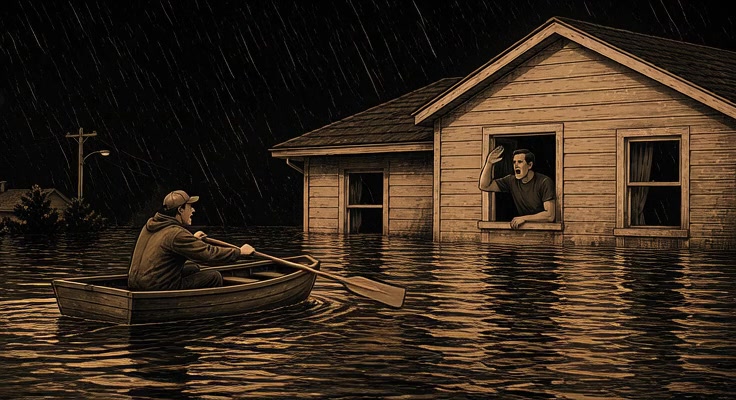
He climbs onto his roof and a helicopter drops a ladder. Grab on. No. Jesus will save me.

He drowns. And when he gets to heaven he asks what happened.
I sent you a car, a boat, and a helicopter.
I was that guy for five years.
The first time I went to my friend Brian about my back — he fixes people for a living — he worked on me a while and we talked story. I felt good. I walked out thinking huh, that was interesting.
A couple years later I ran into him again. I told him it was my back. My leg, my knee, my side. He went to work on my shoulder and my arm. I remember thinking that was strange. I felt good again. I didn’t think much more about it.
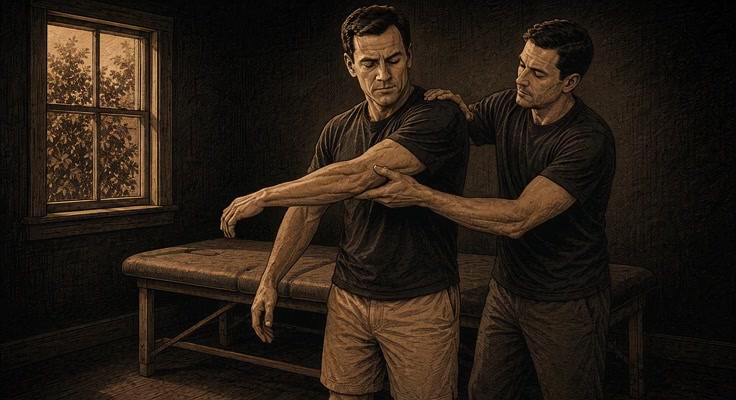
The third time I was with him almost an hour and a half. Somewhere in there it finally landed.
Brian gave me relief. He did that every time, and I always walked out better than I came in. That was never the problem.
The problem was the other half of what he was telling me, and it took me three visits over five years to hear it.
My back didn’t just go bad on its own. There were other things going on — things that weren’t strong, things I’d been avoiding, things I’d worked around so long I stopped noticing. Those are what let it happen. And they feed each other, so there’s no one thing to point at and blame.
He was giving me relief and telling me why I needed it. I only heard the first part.
Relief is real, and it counts. But it doesn’t hold if nothing else changes.
Somebody presses on it, adjusts it, stretches it out, and you feel good walking to the car — and everything that let it happen is still sitting there waiting.
Nobody can do that part for you.
That’s what the DIY means.
And it was never about finding the right body part. Sore back, sore shoulder, stiff neck, bad knee — you’re in exactly the right place, because this isn’t a site about the part. It’s about getting the whole body working again. How you move. What you put in it. Whether you want to move at all. All of it.
You don’t have to figure out what’s wrong with you. You have to get the whole thing going.
THEN MY WASHING MACHINE BROKE
Before any of this, I had a washing machine that quit on me.
So I did what everybody does. I went looking for a video.
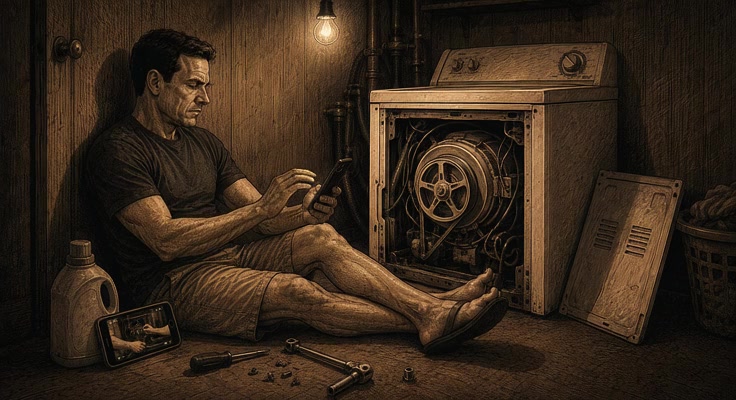
At first I searched for my exact machine and my exact problem. Every video showed me another part to replace, another error code to clear, another temporary fix to try.
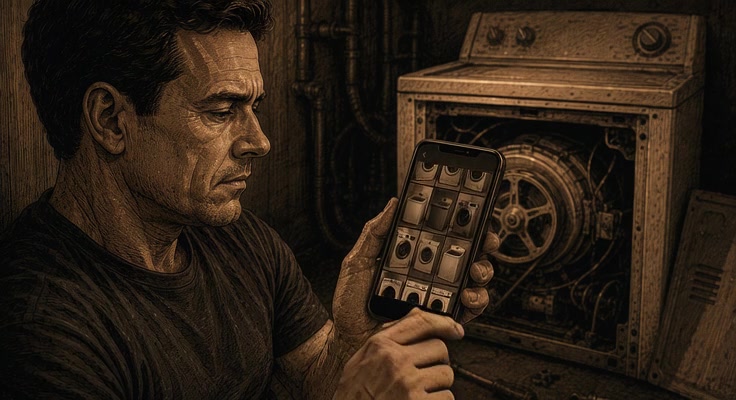
Then I found one guy who approached washing machines differently.
He didn’t start with the broken part. He showed people how the whole machine was supposed to sit, move, drain, balance, and run. He talked about leveling it, maintaining it, and catching small problems before they became big ones.
His advice wasn’t limited to one model. It worked because he understood washing machines.
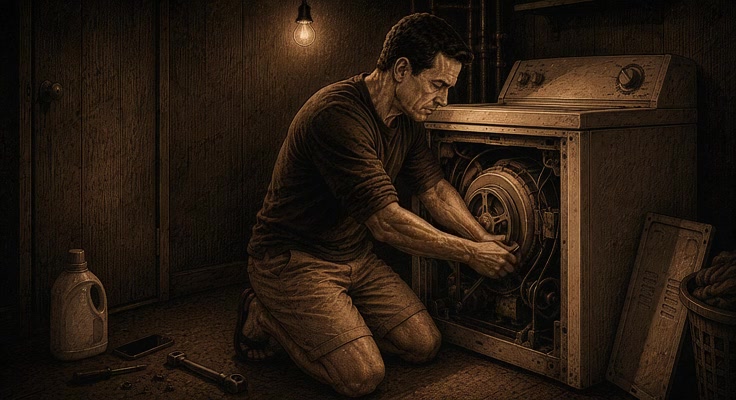
That’s what I’d been looking for the whole time. I just didn’t know it until I found it.
I wanted that for my body.
I wanted a channel that said Shane — this one’s for you. We’re going to figure out what’s going on and get you working again. Not a video for a lower back. Not a protocol for a shoulder. Something that taught me how the machine works so I could look at my own.
I never found it. So I started building it.
Why the Name Was Still Available
When I went looking for the domain, DIYBodyLab.com was sitting there. Nobody had taken it.
I think I know why.
Most of what’s out there is built around the next problem. Come in, get on the table, book the next appointment. There’s no money in teaching somebody to fix themselves — they stop coming back.
I didn’t pick DIY because it was going to make money. I picked it because it’s what happened to me. It’s my journey. Three visits with a friend who fixes people for a living, and what I finally walked away with wasn’t a fix. It was an understanding of what I had to go do.
What Actually Went Wrong
Here’s what I understand now that I didn’t understand then.
It wasn’t one injury. It was five years of guarding.
Something hurts, so you protect it. You move a little differently. You stop doing one thing. Then another. The protecting costs you range, and less range means more protecting, and it goes around and around like that until one day you look up and everything has quietly shut down a little.
I used to think I got weaker because I got hurt. Now I think the two were feeding each other long before I noticed. I hurt, so I guarded. I guarded, so I moved less. Moving less made me weaker, and weaker gave me more reason to guard.
That’s why chasing the sore spot never worked. The sore spot was the loudest signal. It was never the whole story.
WHERE I AM NOW
I’m not at the end of this story. I’m still learning, rebuilding, and paying attention to what changes.
What’s different now is that I understand my body better. I understand how I became weak, what I’m looking at when something shifts, and the difference between temporary relief and lasting change.
That’s where I am today.
Get Strong — at What Cost?
The advice is always the same. Get stronger. Come in and we’ll work it out.
But at what cost?
If your hip is sore, is loading it harder the move? If your back is already angry, are sit-ups going to settle it down? Everybody wants to build you up. Almost nobody asks what shape the rest of you is in first.
That’s the question this site keeps coming back to. What shape is the whole system in right now?
What This Place Is
It’s the channel for all the washing machines.
The systems pages— fascia, nervous system, muscles, spine — aren’t anatomy class. That’s how the machine works. Learn that and you stop needing somebody else’s model number.
The assessmentisn’t a diagnosis. It’s opening the panel and looking.
And the libraryisn’t a list of body parts. It’s what people have already figured out, laid out in plain language, so you can take it and use it on your own machine.
I’m not here to fix anybody. Other people can help you, teach you, work on you, show you what you’re not seeing. Nobody else can live in your body the rest of the week. That part’s yours.
But I can show you how the thing works while you’ve got your hands in it.
I used to measure progress in distance.
Right now, one of my finish lines is walking downstairs with some bounce again.
After five years of trying to get that back, it doesn’t feel small.