
Know Where You Stand
The Mark on the Wall
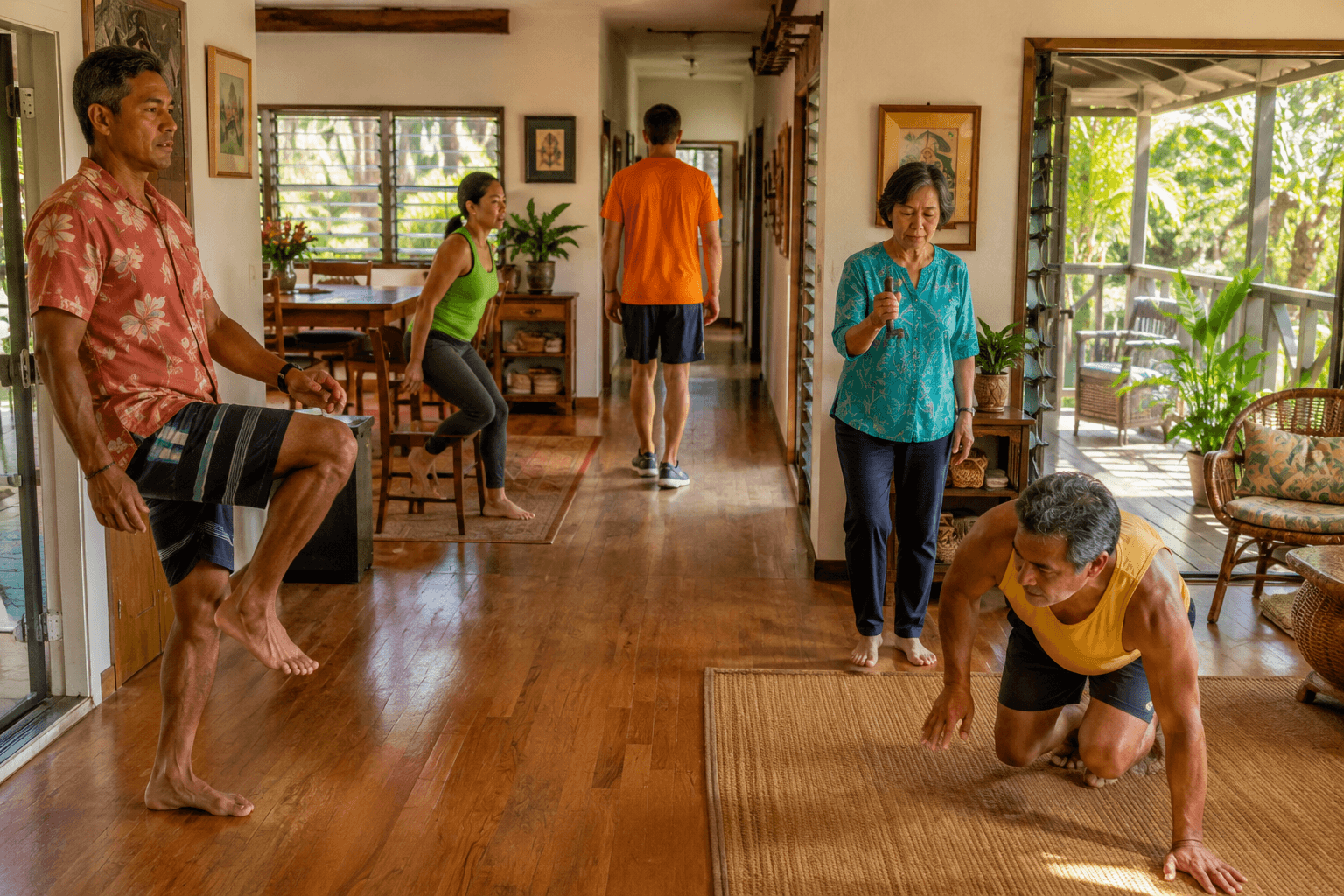
You don’t notice your body changing day by day — until you finally measure it.
Four minutes. No clinic. Write the date next to it.

Test 1
Walk Speed
How fast you walk across a room predicts more about your future than most things a doctor measures. A pooled study of 34,485 adults found the spread between slow and fast walkers at age 75 ran from 19% to 87% ten-year survival — same age, same sex, different pace.
seconds
tenths
Mark 13 feet with tape. Walk it at your normal everyday pace — not fast, not slow. Time it.
Test 2
Sit-to-Stand
Getting out of a chair without your hands is one of the first things to go — and one of the clearest signals that something has changed in lower body strength.
How to do it
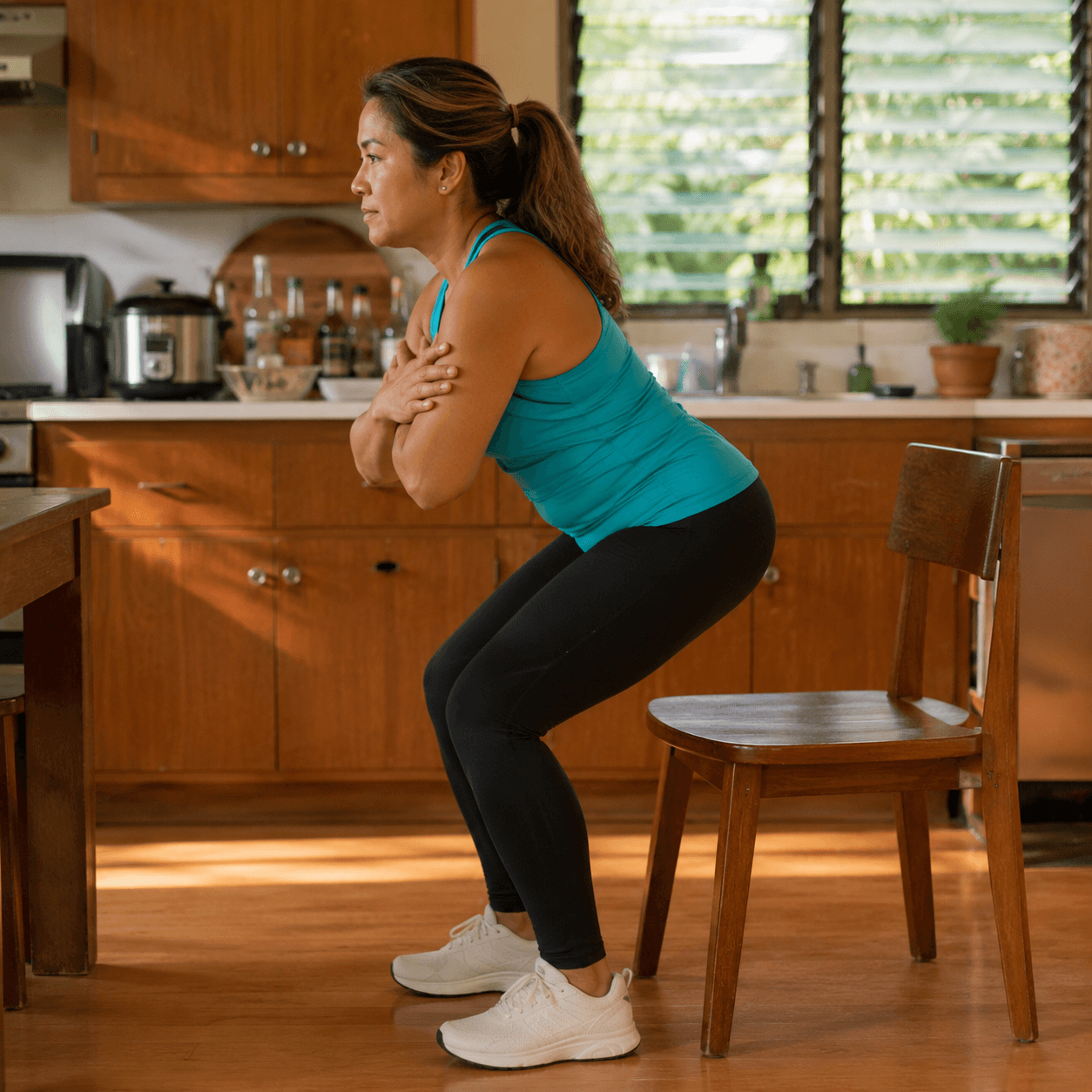
- 1Sit in a plain chair with no armrests, seat about 17 inches high
- 2Cross your arms over your chest
- 3Feet flat on the floor, shoulder-width apart
- 4Stand all the way up and sit all the way back down
- 5Count how many complete stands you do in 30 seconds
- 6Arms stay crossed the whole time — no hands on the chair
Test 3
Getting Up Off the Ground
This is the one nobody practices — and the one that decides whether a fall becomes a turning point. The sitting-rising test predicts more than mobility.
How to do it
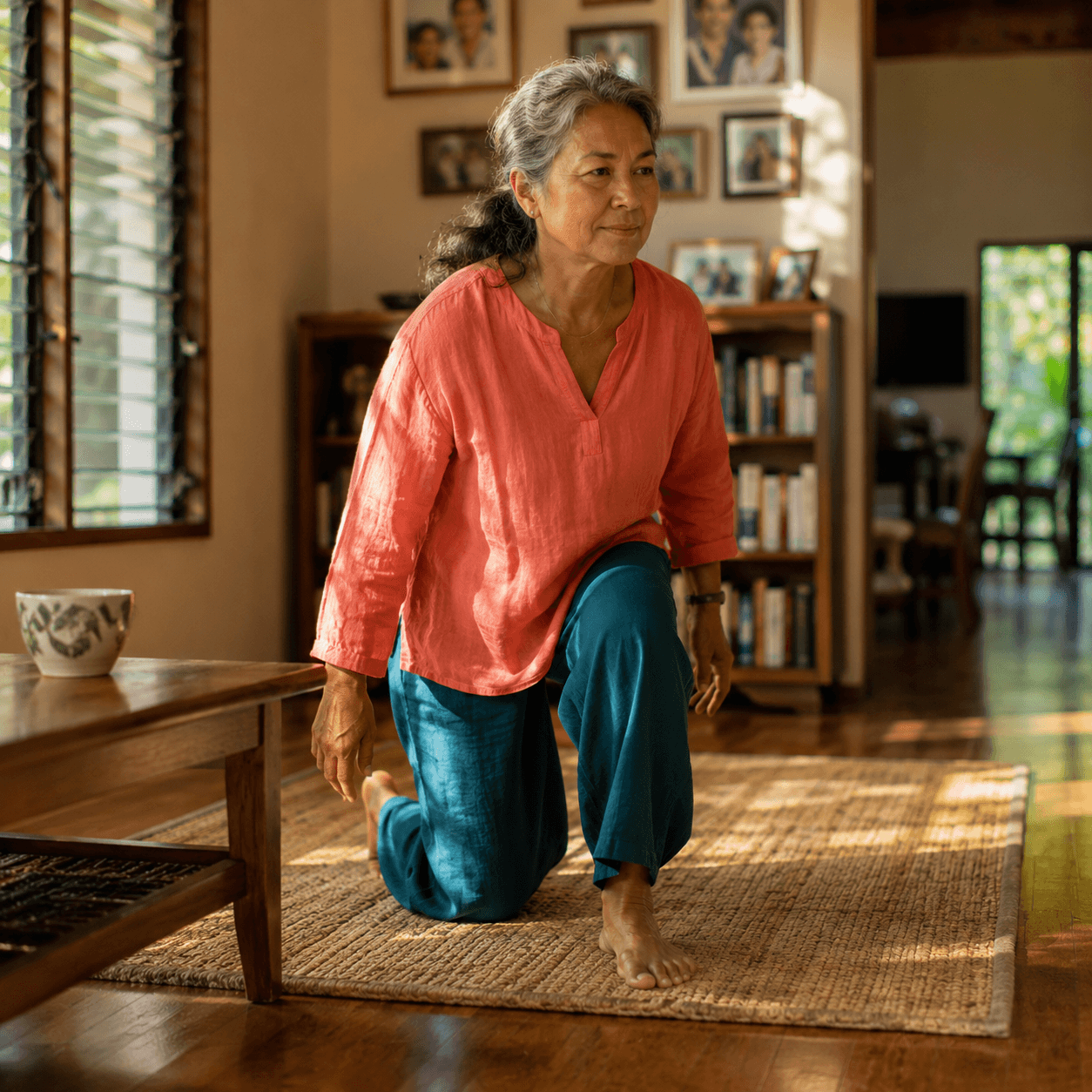
- 1Start standing, barefoot, wearing comfortable clothes
- 2Lower yourself to sitting on the floor — without holding onto anything if you can
- 3Then get back up to standing — without using your hands, knees, or forearms if you can
- 4Score yourself: start at 10 points
- 5Subtract 1 point each time you use a hand, forearm, knee, or the side of your leg for support
- 6Subtract 0.5 if you lose your balance at any point
Test 4
Balance
Balance holds steady into your 50s and then drops fast. Not being able to hold 10 seconds on one leg was linked to 84% higher mortality risk in a 2022 study of 1,702 adults — independent of age, weight, and other health factors.
How to do it
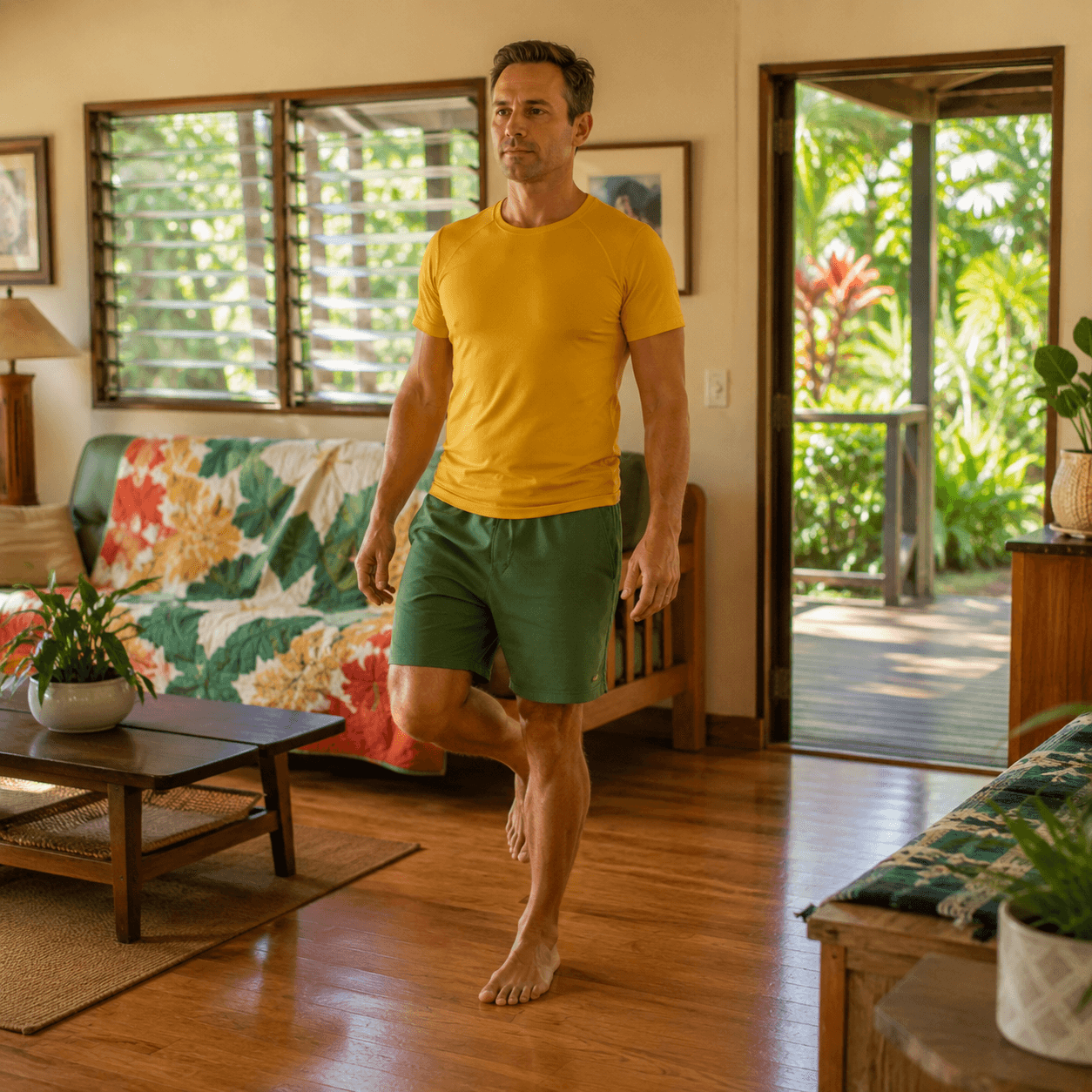
- 1Stand near a wall or counter — close enough to grab if needed, not touching
- 2Hands on hips
- 3Lift one foot a few inches off the floor
- 4Start timing when the foot leaves the ground
- 5Stop when the foot touches down, a hand leaves a hip, or you grab the wall
- 6Do each leg. Record the better of the two.
- 7Then repeat with eyes closed — both legs again.
Test 5
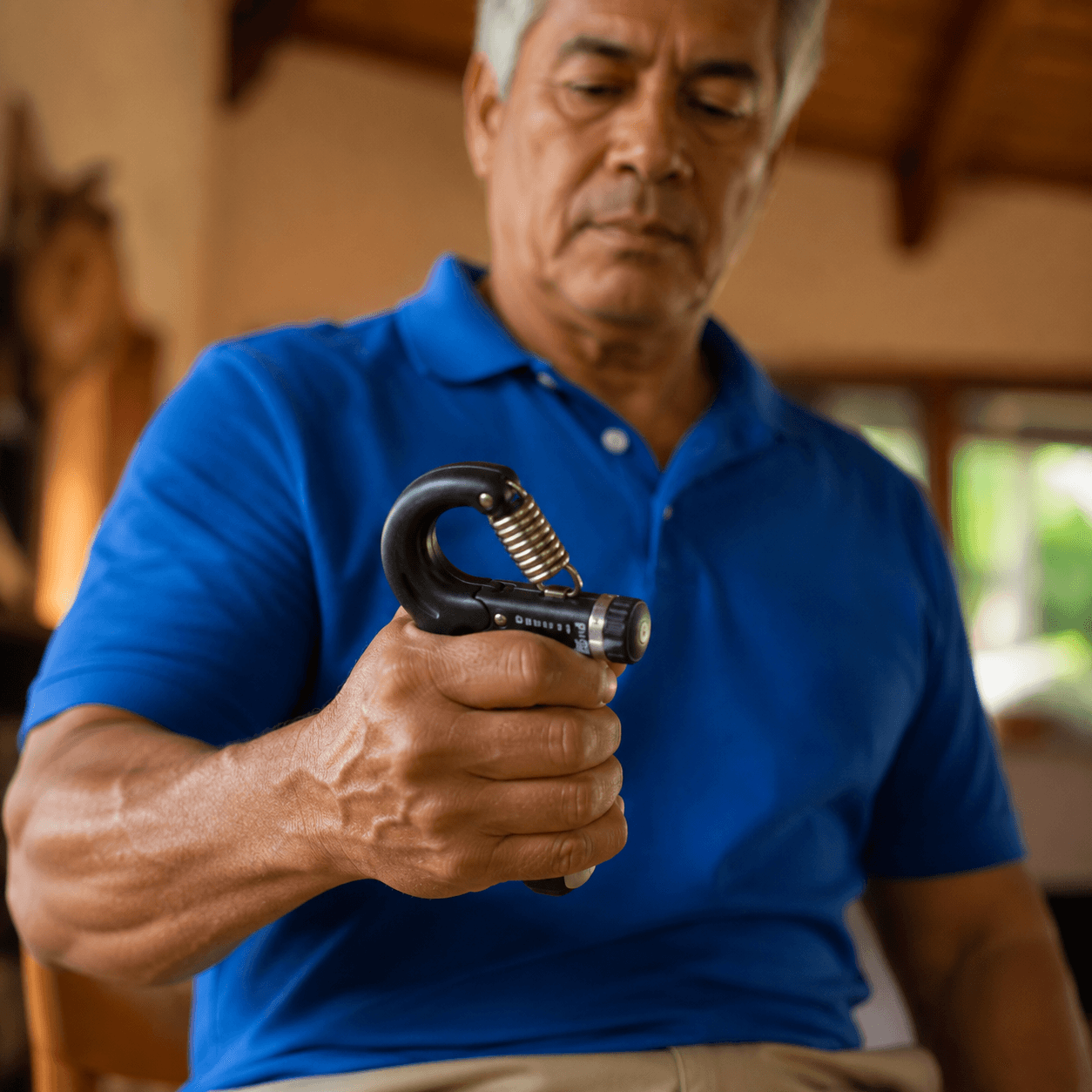
Grip Strength
Grip strength is a readout for whole-body strength — it shows up in study after study as a simple stand-in for overall capability. It’s the last of the five tests and the one that completes the picture.
With a dynamometer
- 1Hold the dynamometer in one hand, arm at your side, elbow slightly bent
- 2Squeeze as hard as you can for 3 seconds
- 3Best of three attempts, each hand
- 4Record in pounds
No dynamometer? Try these alternatives
Towel hang: Roll a thick towel and hang from it over a pull-up bar or sturdy door frame. Time how long you can hold. Under 10 seconds = low grip; 10–30 seconds = moderate; 30+ seconds = good.
Grocery bag carry: Fill a bag to about 20 lbs. Carry it by the handles (not looped over your wrist) for 30 seconds. Can you hold it without the handles digging in and forcing you to put it down? Yes = functional grip. No = worth building.
Plate pinch:Pinch two weight plates or thick books of equal size between your thumb and four fingers. Hold for 30 seconds. If you can’t hold 10 lbs this way for 30 seconds, grip is below average.
Designed & built by DIY Body Lab
DIY Body Lab is not a medical practice, and the information here is not medical advice. Everything on this site is personal research and education shared for informational purposes only. If you have a health condition, an injury, or any concern about your physical health, please talk to your doctor before making changes based on anything you read here.