
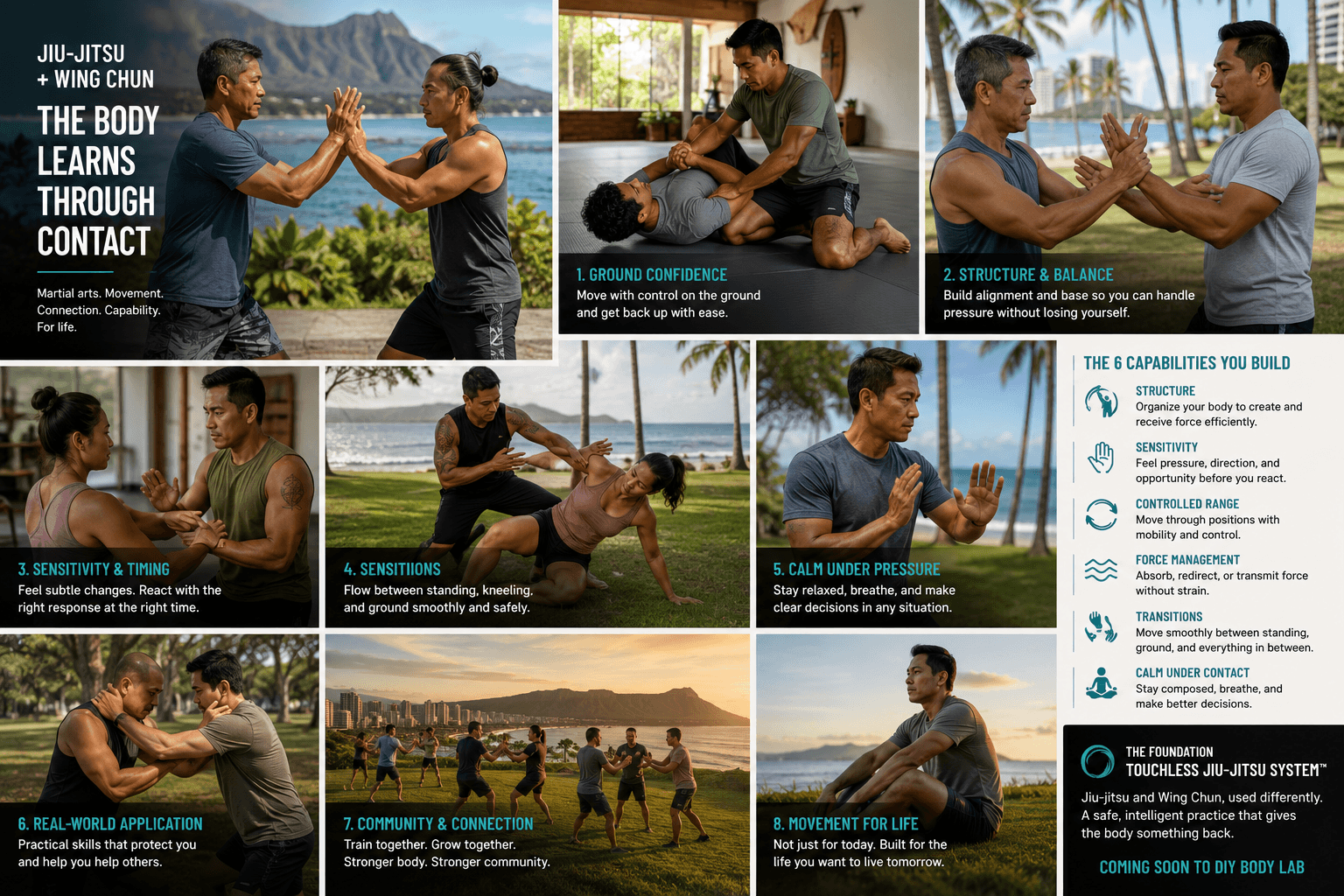
The goal is not to turn every movement into a fight.
The goal is to use martial principles to make the body more adaptable.
This article is part of the Touchless Jiu-Jitsu wing of the site — the application side, taught by Shane directly: Explore Touchless Jiu-Jitsu
The Body Learns Through Contact
Most exercise happens in a predictable world.
The floor stays still. The weight follows the same path. The machine does not change its mind halfway through the repetition.
A training partner is different.
They shift their weight. They pull. They relax. They resist. They change direction. Your body has to feel what is happening, organize itself, and respond.
That is one reason martial arts can teach something ordinary exercise sometimes misses: how to move when the answer is not known ahead of time.
Jiu-jitsu and Wing Chun approach that problem from different directions.
Jiu-jitsu teaches you to organize yourself when the floor, gravity, another body, and awkward positions are all part of the problem.
Wing Chun teaches you to maintain structure, feel pressure through contact, redirect force, and respond at close range while standing.
Together, they offer the beginnings of something bigger than a fighting system. They can become a contact-based capability practice.
The Martial Art Is Not the Whole Product
This does not mean everyone needs to spar, fight, choke, punch, or compete.
The useful part can be separated from the dangerous part.
You can train:
- Balance without knocking someone down
- Structure without striking them
- Pressure without crushing them
- Joint range without forcing submissions
- Ground movement without competitive rolling
- Sensitivity without fighting
- Reaction without panic
- Conditioning without turning every session into survival
That is where this approach begins to separate itself from ordinary martial-arts training.
The question is not: How do we make older people better fighters?
The question is: Which parts of martial arts help people move, react, balance, get off the ground, manage pressure, and stay capable?
That is a different question.
What Jiu-Jitsu Brings
The ground stops being an enemy
Many adults slowly lose confidence getting down to the floor and getting back up.
Jiu-jitsu spends enormous amounts of time transitioning between sitting, kneeling, lying down, turning, posting on a hand or elbow, shifting the hips, and standing back up.
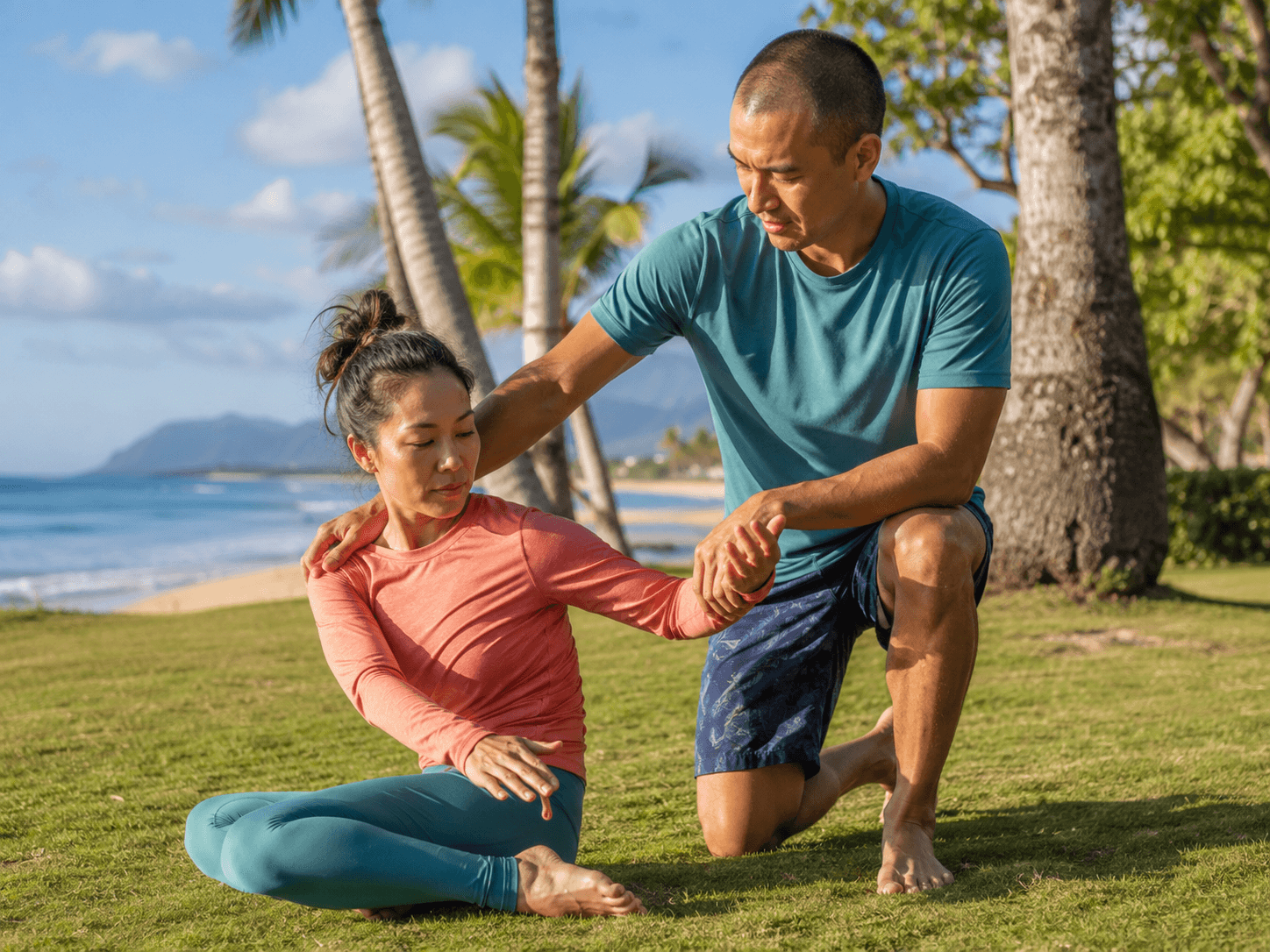
In this approach, those positions do not need to become competitive techniques. They can become a movement vocabulary.
The goal is not winning from the floor. The goal is being comfortable there.
Strength in awkward positions
Jiu-jitsu rarely asks the body to produce force from a perfectly arranged gym position.
You push, pull, brace, rotate, grip, and shift while another person changes the problem.
Research on competitive BJJ describes it as intermittent work involving alternating high-, moderate-, and low-intensity actions. Strength, muscular endurance, aerobic fitness, anaerobic capacity, and power all contribute to performance, although most of that evidence comes from athletes rather than ordinary adults training for health. (PMC)
That distinction matters. The research shows what the sport demands. It does not prove that full-intensity BJJ is automatically the best health program for everybody.
The idea is to borrow the useful demands and control the dose.
Problem-solving under pressure
Jiu-jitsu presents a moving puzzle.
You need to notice:
- Where the weight is
- Where space is available
- Which direction is blocked
- Whether to push, pull, rotate, wait, or move around
- When effort is helping
- When effort is wasting energy
What Wing Chun Brings
Wing Chun trains the body to organize itself while standing and in contact with another person.
Through stance work, stepping, forms, partner drills, and chi sao, practitioners repeatedly work with:
- Balance
- Weight shifting
- Upright structure
- Hand-eye coordination
- Timing
- Pressure awareness
- Redirection
- Controlled repetition
- Continuous movement
Chi sao adds something especially useful: changing information through touch.
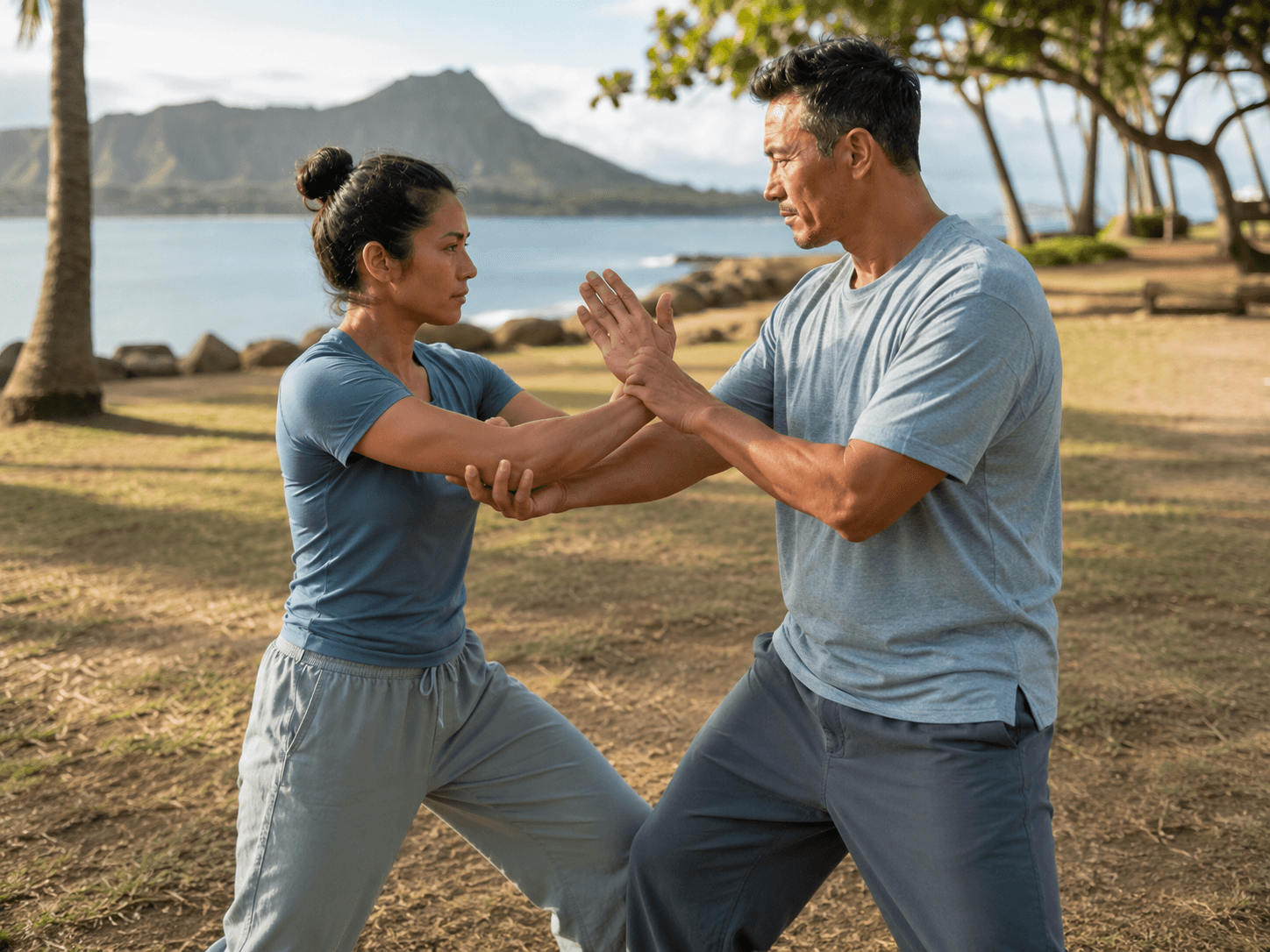
The partner’s pressure is never exactly the same twice. The body has to feel the direction, adjust tension, maintain balance, and choose a response.
The goal is not to overpower every force.
The goal is to stay organized, recognize what is changing, and respond without unnecessary tension.
That makes Wing Chun useful as a movement practice, not only as a fighting system.
Strength and Conditioning
Wing Chun can also create meaningful physical work.
Continuous forms, footwork, partner drills, and pad work can challenge:
- Leg endurance
- Postural strength
- Shoulder and arm endurance
- Coordination
- Cardiovascular fitness
- The ability to maintain structure while tired
The intensity depends on how the practice is taught.
A slow form, a technical chi sao drill, and a continuous pad-work session create very different physical demands.
That range is useful because the practice can be scaled.
Wing Chun can be performed slowly to develop structure, coordination, balance, and pressure awareness.
It can also be practiced continuously to build conditioning, movement endurance, and work capacity.
This makes it adaptable for different ages, experience levels, and physical abilities.
What Research Has Begun to Measure
Researchers have begun studying Wing Chun training as a physical practice, including its effects on strength, force development, balance, coordination, and sensorimotor performance.
Small studies involving middle-aged and older adults have reported changes in selected strength and force-development measures.
Earlier laboratory research also found that continuous Wing Chun practice could create a meaningful cardiovascular demand.
These studies do not define the entire value of the practice. They show that researchers are beginning to measure physical qualities martial artists have trained for generations.
Readers who want the study details, dates, methods, and limitations can examine the original papers in the Source Library.
Why the Combination Is Interesting
Jiu-jitsu and Wing Chun fill in different parts of the map.
| Jiu-Jitsu | Wing Chun |
|---|---|
| Ground organization | Upright organization |
| Large whole-body transitions | Short-range coordinated responses |
| Leverage through hips and trunk | Structure through stance and center |
| Escaping pressure | Reading and redirecting pressure |
| Getting down and back up | Staying balanced while standing |
| Longer positional puzzles | Faster close-contact decisions |
The value is not that one “fixes” what the other lacks.
The value is that together they expose the body to a wider vocabulary.
This approach could move from:
Standing → contact → balance disturbance → controlled descent → ground movement → return to standing
That is not a fight sequence. That is a capability sequence.
Connected Movement, Not Isolated Parts
Jiu-jitsu and Wing Chun rarely ask one muscle or one joint to work alone.
A step, frame, turn, pull, post, shift, or redirection travels through several parts of the body at once. The feet organize against the ground. The hips and trunk adjust. The shoulders and hands respond. Balance, pressure, timing, and movement all change together.
That whole-body coordination is one reason these arts are useful for capability training.
Both practices repeatedly use:
- Rotation
- Weight shifting
- Pushing and pulling
- Yielding and redirecting
- Changes of direction
- Elastic, spring-like movement
- Force traveling through the body
- Continuous adjustment to another person
Fascia and other connective tissues are part of the body-wide network that connects muscles, joints, and regions together. They help transmit and manage load, and they adapt to the forces the body experiences repeatedly.
But the important idea here is not that one drill “releases fascia.”
The important idea is that the body learns to:
- Share load across several regions
- Adjust tension instead of staying rigid
- Organize around changing pressure
- Move as a connected system
- Produce and absorb force without relying on one isolated area
That is the fascia-informed part of the method.
Not a promise that a technique fixes tissue.
A way of designing movement so the whole body participates.
Touchless Jiu-Jitsu uses connected movement, partner feedback, and changing pressure to help people explore how their body organizes force.
Touchless Jiu-Jitsu uses fascia-informed movement principles, but it does not claim to medically treat or repair connective tissue.
The Nervous System Learns From the Partner
A partner provides information that a machine cannot.
Pressure increases. Pressure disappears. The body changes direction. The expected opening closes. A new opening appears.
That creates a continuing loop:
Feel → organize → respond → receive new information → adjust again
Touchless Jiu-Jitsu Is Not Ordinary Sparring
Traditional martial-arts classes often work toward:
- Technical effectiveness
- Competition
- Speed
- Power
- Winning exchanges
- Surviving resistance
Touchless Jiu-Jitsu begins with a different goal: give the body something back.
That requires changing how the arts are practiced.
Slow enough to feel
Instead of racing through a position, pause where the body becomes uncertain.
Do not force farther.
Let the person breathe, organize, and become more comfortable.
Pressure without panic
The partner adds enough contact to create information, but not enough to turn the drill into a contest.
Range with control
Jiu-jitsu positions can expose the hips, shoulders, wrists, spine, and trunk to unusual angles.
The objective is not to crank the joint.
It is to explore the position while maintaining muscular control and an easy exit.
Standing and ground connected
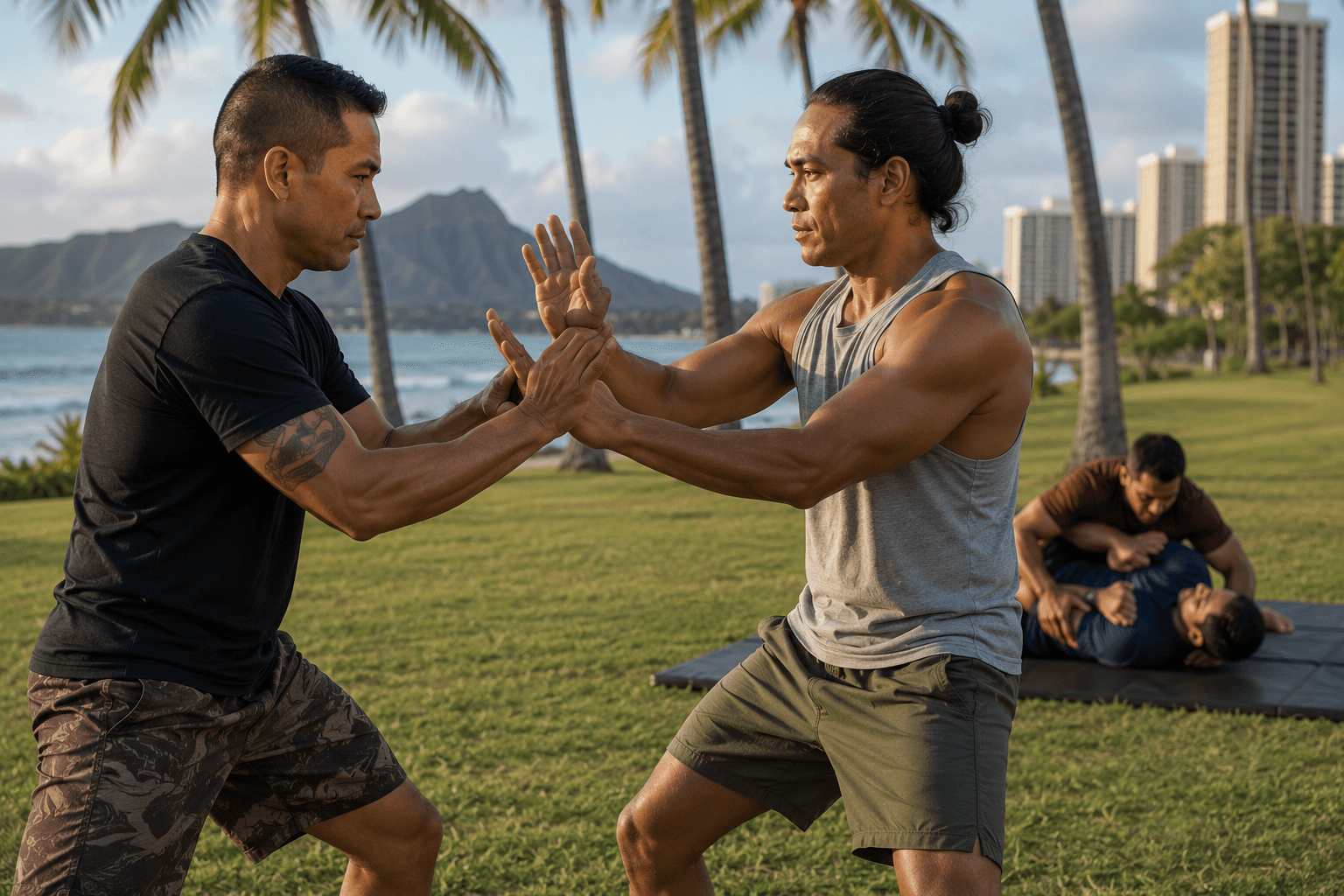
Wing Chun provides stance, stepping, contact, and upright organization.
Jiu-jitsu provides lowering, turning, posting, ground transitions, and returning to the feet.
The two arts become one continuous movement laboratory.
No winning required
A successful repetition might mean:
- Breathing stayed calm
- The joint remained comfortable
- The person felt the direction of pressure
- They found a smoother transition
- They used less unnecessary tension
- They got back to standing with control
That is body education wearing a martial-arts gi.
The Six Capabilities You Are Building
1. Structure
Can the body organize itself well enough to receive and produce force?
Wing Chun contributes stance and upright alignment.
Jiu-jitsu contributes base and structure in kneeling, seated, side-lying, supine, and transitional positions.
2. Sensitivity
Can the person feel where pressure is coming from before responding?
Partner contact makes pressure visible to the nervous system.
3. Controlled range
Can the person enter, maintain, and leave a position without forcing it?
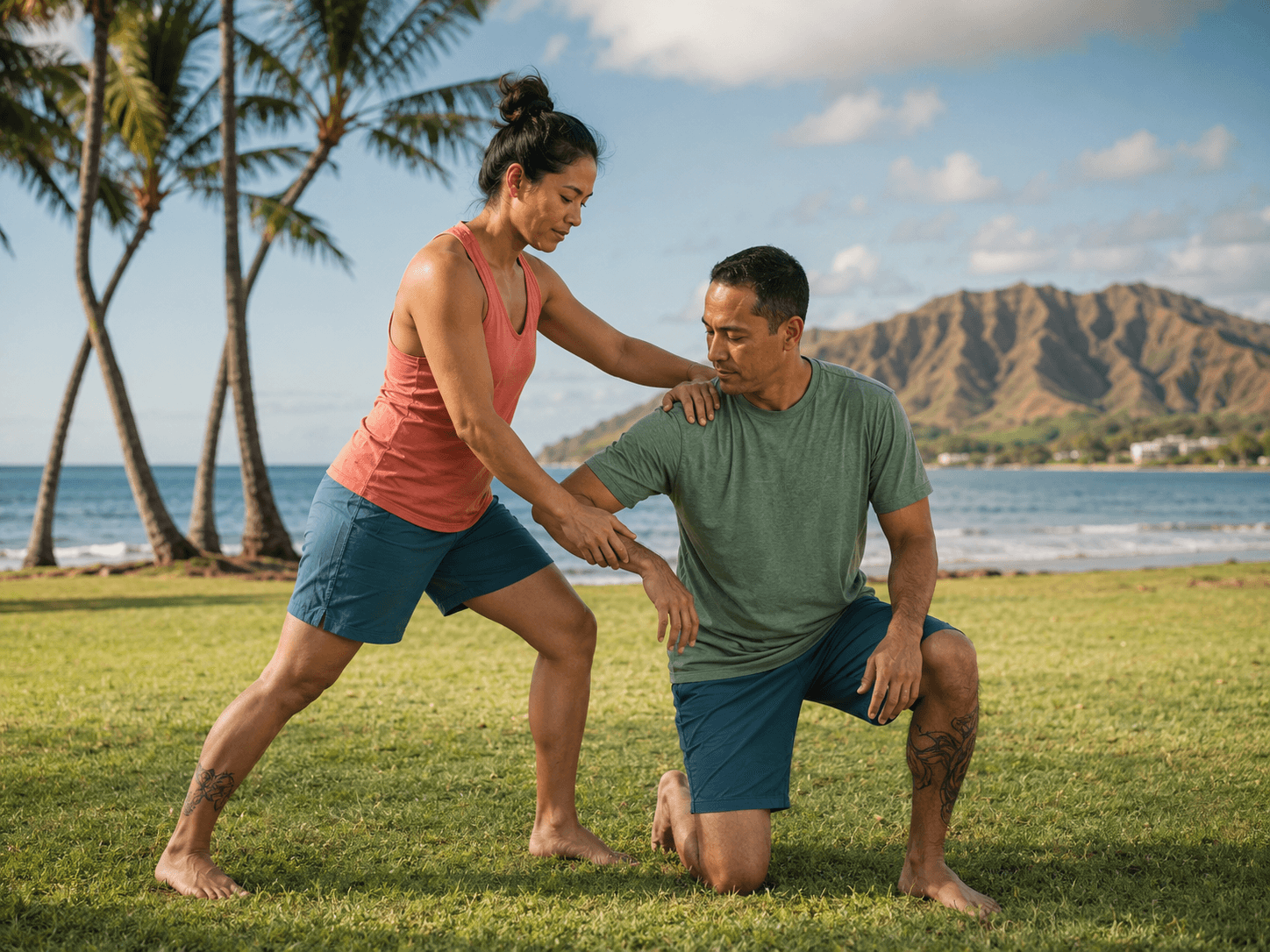
This is where a “slow beyond slow” approach belongs.
4. Force management
Can the body absorb, redirect, transmit, or produce force without one area doing all the work?
5. Transitions
Can the person move between standing, kneeling, sitting, lying, turning, and rising?
This may be one of the most valuable jiu-jitsu contributions for aging adults.
6. Calm under contact
Can someone continue breathing, thinking, and choosing when another person adds pressure?
That is useful in self-defense.
It is also useful in ordinary life.