Touchless Jiu-Jitsu
If you cannot move, you cannot defend yourself.
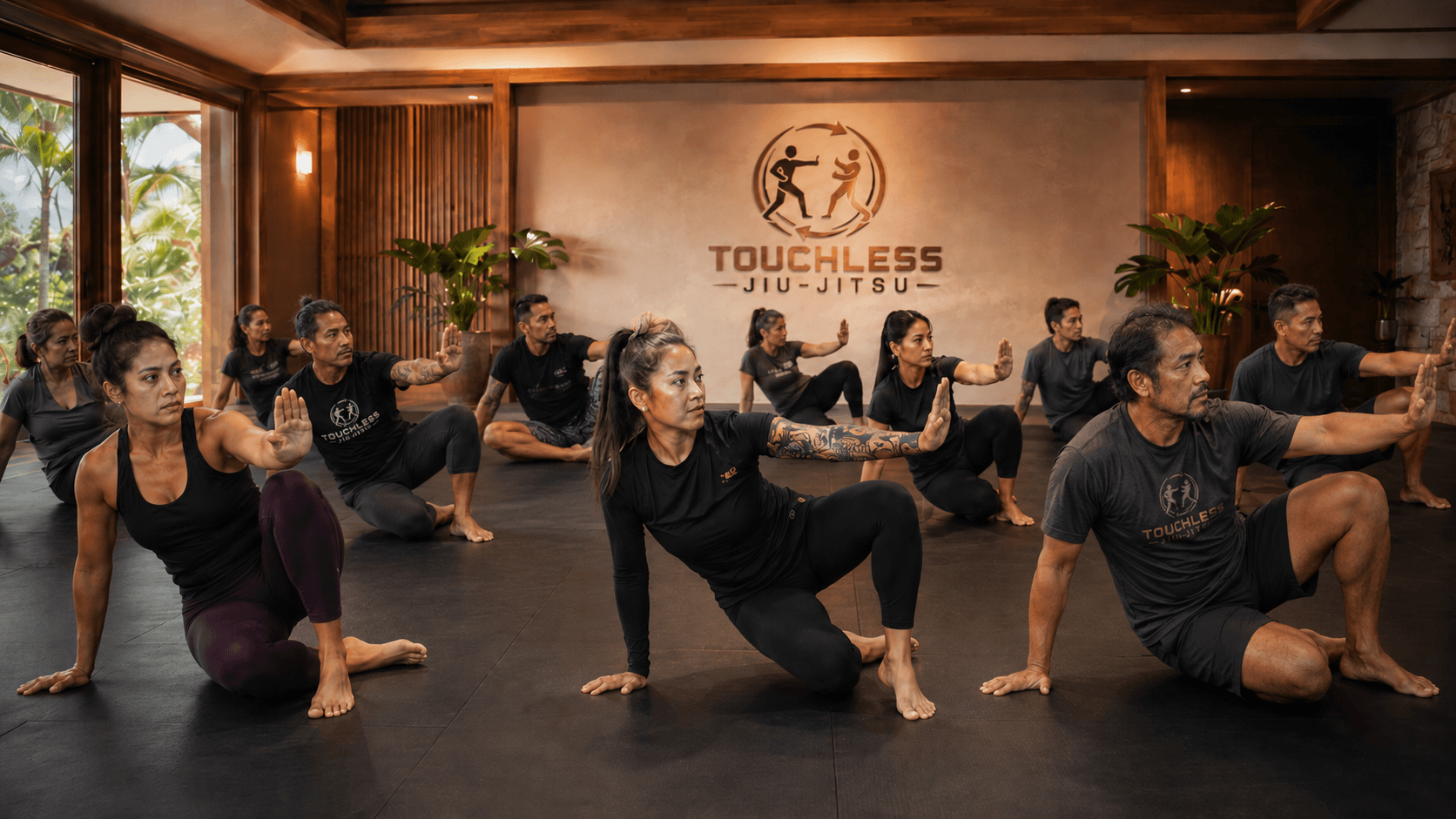
Most of self-defense never gets to hands. It’s the part before — a body that works, and attention that’s free to notice what’s around you. That’s what this wing is about.
I’m not a physical therapist. Not a massage therapist, not an acupuncturist, not a doctor, not a clinician.
I’m a martial artist with over thirty years of experience — including thirty years of beating my body up. The last five have been about fixing it.
That’s what this is. The Library covers what the research says about how the body works. This wing covers what I actually do about it, and what I teach. If you walk out your door thinking about your sore hip, you’re not scanning the parking lot. You’re not aware of anything except your hip. A body that can’t move can’t protect itself, and that’s where self-defense actually starts.
— Shane
Ready
The Body That Can
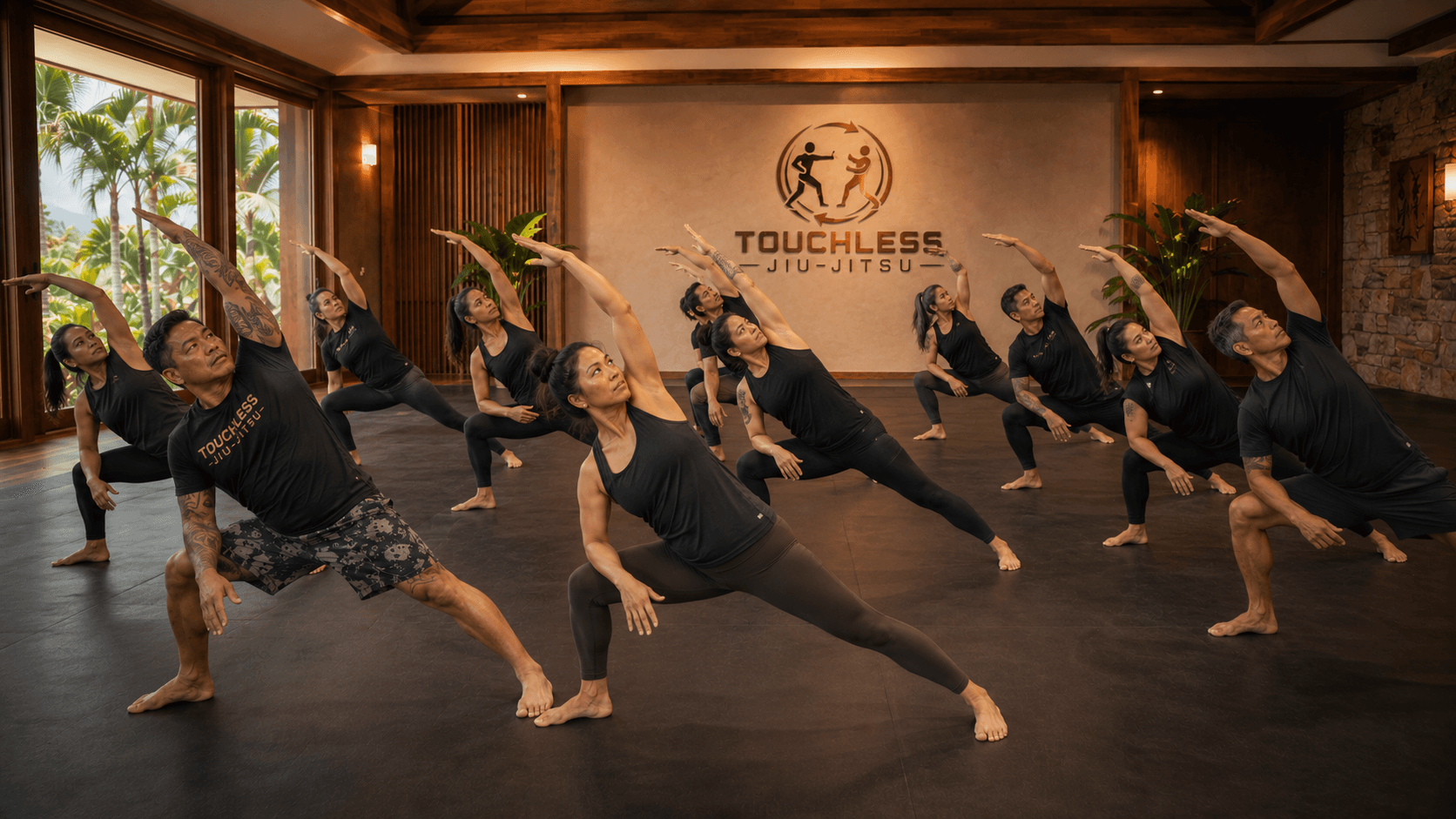
Range, strength, getting out of pain, getting off the ground. In class this looks like stretching, myofascial work, and movement — and people wonder what it has to do with self-defense. Everything. This is the layer underneath all the others.
- Getting Up Off the Ground →
- Mobility vs. Flexibility →
- When the Body Hits the Brakes →
- Recovery Isn't Just Rest →
- Built for Everyday Life →
Coming: Being Comfortable on the Ground
Aware
Before Anything Happens
Where you park. Where you sit. What you notice on the way to the car. Talking your way out of something before it becomes something. This is the layer that works by never being tested — and the first one that fails when your body is taking up all your attention.


Coming: the self-defense guide
Structure
What Holds You Up
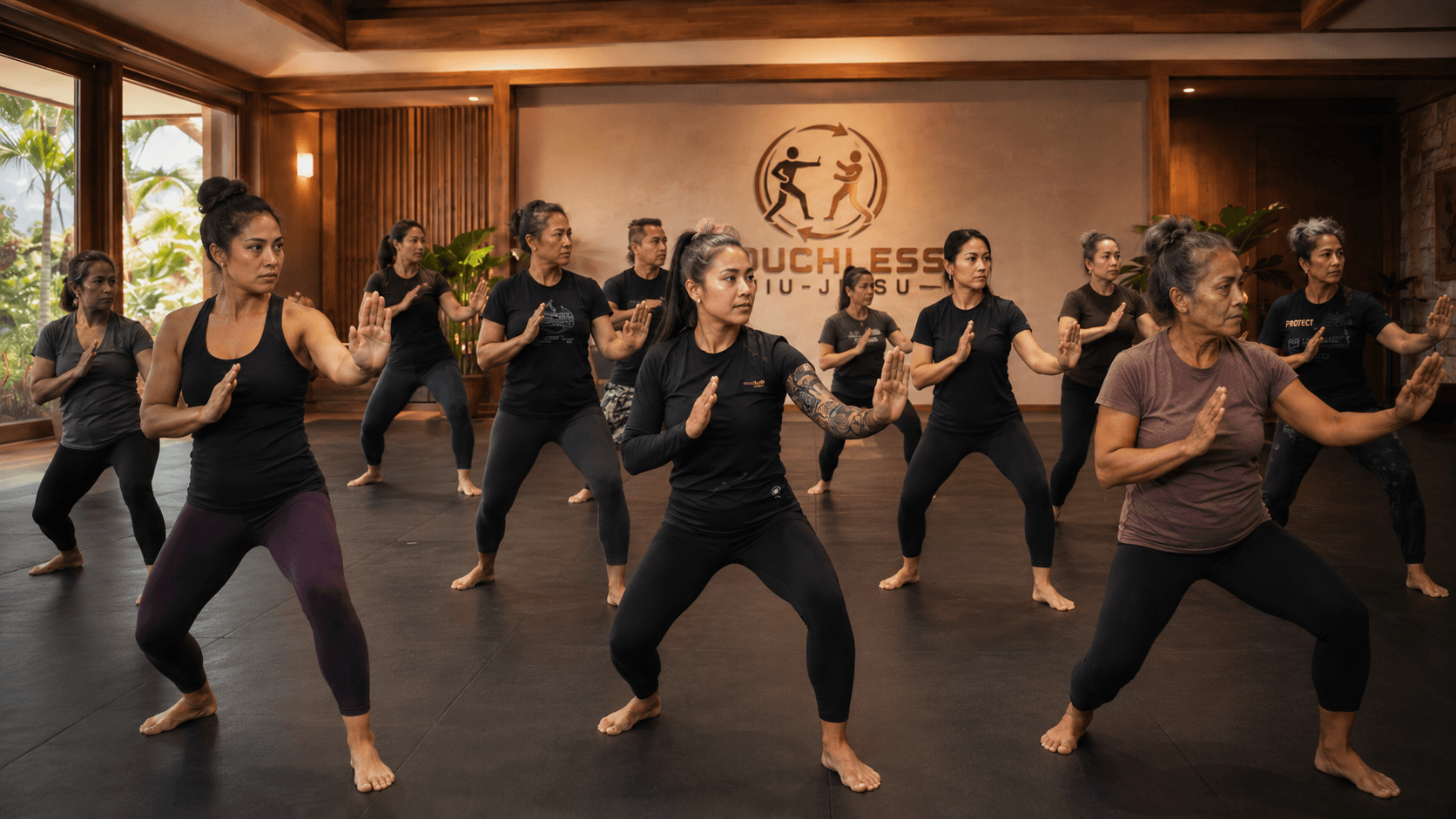
Balance, leverage, posture, pressure, frames. The principles underneath jiu-jitsu and Wing Chun, taught as body education rather than fighting. You don’t have to intend to fight to want to not get knocked over.
Contact
When It Does Happen
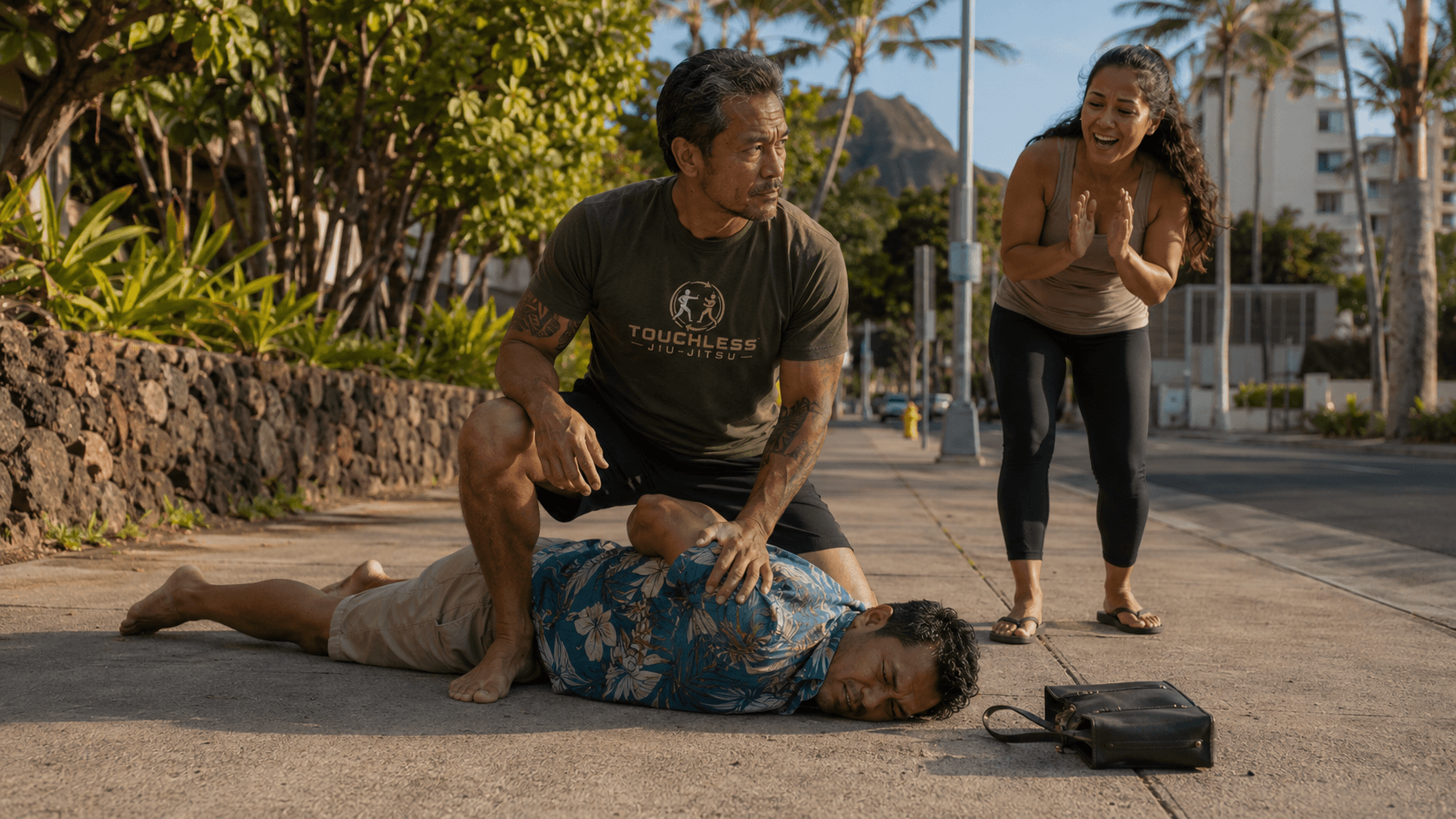
The hands-on material. It’s last here on purpose, and it’s the smallest part. If everything above is working, this is the layer you never reach.
Coming
Free Download
The Self-Defense Guide
Awareness, positioning, and the things worth thinking about before you leave the house. Free — sign up and it’s yours.