

Touching your toes tells you that you can reach a position.
It does not tell you whether you can control that position, produce force from it, maintain your balance, or react when the ground suddenly changes.
That is the difference between having range and being able to use it.
Stretching can be valuable. It can improve range of motion, reduce some forms of stiffness, and make movement feel easier. But everyday capability also depends on strength, coordination, balance, sensory information, and control.
A body does not simply need access to a position. It needs to know what to do when it gets there.
First, Let’s Untangle the Words
Terms such as flexibility, range of motion, and mobility are often used as though they mean the same thing. Even professional organizations and researchers do not always use them consistently.
A 2026 paper in Sports Medicine argues that range of motion is the broadest idea. It describes how far a joint can move and can be influenced by soft-tissue extensibility, neural control, balance, discomfort, body structure, and the shape of the joint itself. Flexibility is only one trainable contributor to that available range. (Springer)
For this DIY Body Lab page, use these plain-language definitions:
- Flexibility
- How much length or extensibility the tissues around a joint allow.
- Range of motion
- How far the joint can actually travel.
- Mobility
- How well you can actively move through and control the range available to you.
- Capability
- How well you can use that movement during an actual task.
Capability is a DIY Body Lab teaching term, not a formal medical diagnosis or universally standardized scientific measurement.
A toe-touch mostly shows available range in one controlled situation. Stepping off an unexpected curb asks for much more.
Stretching Really Does Work
This page is not an argument against stretching.
Long-term stretching programs generally improve joint range of motion. A 2024 systematic review covering 77 studies found a moderate overall improvement in range of motion from stretch training. Static stretching and proprioceptive neuromuscular facilitation generally produced larger long-term changes than ballistic or dynamic stretching when increasing range was the specific goal. (PubMed)
A larger review covering 189 studies also found that static stretching can improve flexibility both immediately and over time. (PubMed)
Stretching may produce these changes partly by:
- Temporarily or chronically reducing some forms of tissue stiffness
- Increasing tolerance to the sensation of stretch
- Allowing the nervous system to become more comfortable at the edge of a range
A 2025 review found that improved range following static stretching was associated with both reduced stiffness and increased stretch tolerance. It did not find a meaningful change in muscle-fascicle length across the included research. (PubMed)
So stretching is not fake, useless, or outdated. It is simply one tool.
Range Is Not the Same as Control
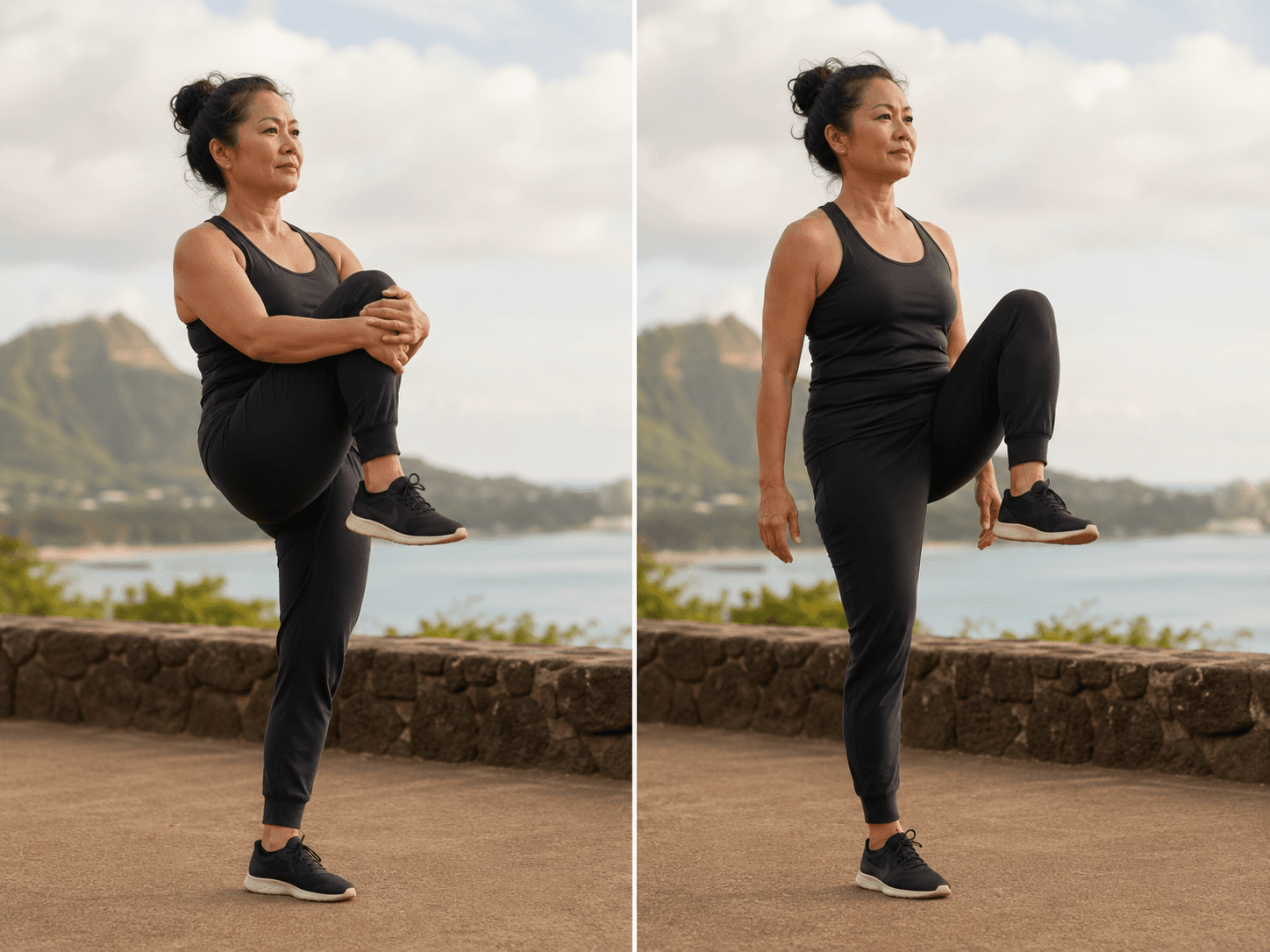
Imagine that two people can both place a foot on a high step.
The first person can only hold the position by pulling the leg into place with their hands. The second person can lift the leg there, balance, lower it slowly, and step back down under control.
They may appear to have similar passive range, but they do not have the same movement capability.
Passive range means an outside force helps create or hold the position. That outside force could be gravity, a strap, another person, your own hands, or the floor.
Active range is the portion you can reach and control using your own muscular effort.
You do not necessarily need every inch of passive range to become active. But a large gap between the two can help explain why someone feels loose during stretching yet awkward, weak, or uncertain during movement.
Range is where you can go. Control is what you can do there.
Strength Can Also Improve Range
Stretching is not the only way to improve range of motion.
A 2021 systematic review compared supervised resistance training with stretching across 11 randomized studies involving 452 participants. It found no statistically significant difference between the two approaches in their effects on range of motion, although the studies and programs varied considerably. (PubMed)
A larger 2023 review of 55 studies also found that resistance training improved range of motion. Across the included evidence, resistance training and stretching did not produce significantly different range-of-motion improvements. (PubMed)
This does not mean strength training always replaces stretching. It means the body can gain range through more than one doorway.
Strength exercises performed through an appropriate range may help someone explore the position, produce force there, control the return, become more confident using it, and improve range at the same time.
That combination begins moving us from flexibility toward capability.
Stretching is useful. It just isn’t the whole job.
The Curb Test
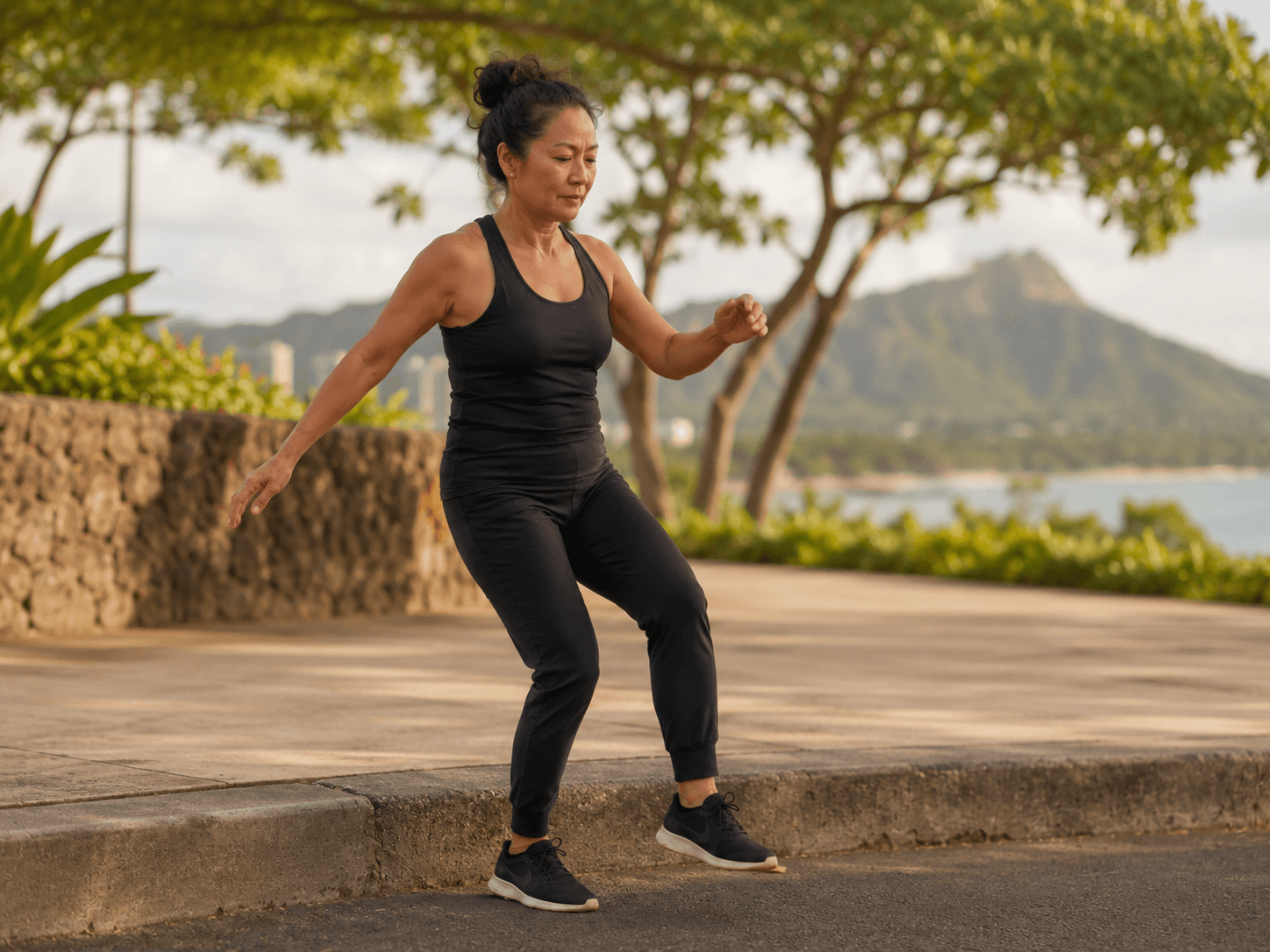
Picture yourself walking through a parking lot. You misjudge the curb and your foot drops farther than expected. There is no time to lie down and stretch first.
Your body must quickly:
- 1.Detect the change in the ground
- 2.Decide where your weight is moving
- 3.Organize the foot and ankle
- 4.Produce enough force through the leg
- 5.Control the knee, hip, and trunk
- 6.Take another step when necessary
- 7.Recover your balance
That response involves range of motion, but range alone is not enough.
The National Institute on Aging discusses flexibility, muscular strength, and balance as separate parts of physical ability. Flexibility helps a joint move. Strength helps perform and manage tasks. Balance helps maintain stability while standing or moving. (NIA)
Research also treats reactive balance as its own trainable quality. It is the ability to respond after something unexpectedly disturbs your balance.
A 2026 systematic review found that perturbation-based balance training, which safely exposes people to slips, trips, pushes, or other controlled disturbances, improved reactive balance and was associated with lower fall rates in older adults. The certainty of some results was low, so this should not be presented as a guarantee. (PubMed)
The larger point is simple: the ability to recover from a trip is trained by practicing balance and recovery responses, not merely by increasing passive flexibility.
Why Someone Can Feel Loose but Still Move Poorly
Movement is a whole-body conversation.
A person may have adequate tissue flexibility but still struggle because of:
- Limited strength
- Poor balance
- Slow recovery reactions
- Fear or uncertainty
- Lack of practice in the position
- Difficulty coordinating several joints together
- Pain or protective tension
- Limited awareness of where the body is in space
Greater range does not automatically teach the nervous system how to organize that range. The body may have access to the room but still not know how to move the furniture.
Keep Stretching. Add Control.
You do not need to choose between stretching and strength. A practical sequence is:
- 1.Open the range. Use comfortable movement or stretching to explore the position.
- 2.Own the range. Move into and out of it slowly using your own muscular control.
- 3.Load the range. Add manageable resistance when appropriate.
- 4.Use the range. Practice it inside a real movement such as stepping, reaching, carrying, getting off the floor, or changing direction.
For example, someone working on ankle movement might combine a comfortable calf stretch, slow ankle movement, controlled heel raises, supported single-leg balance, and a gentle step-down.
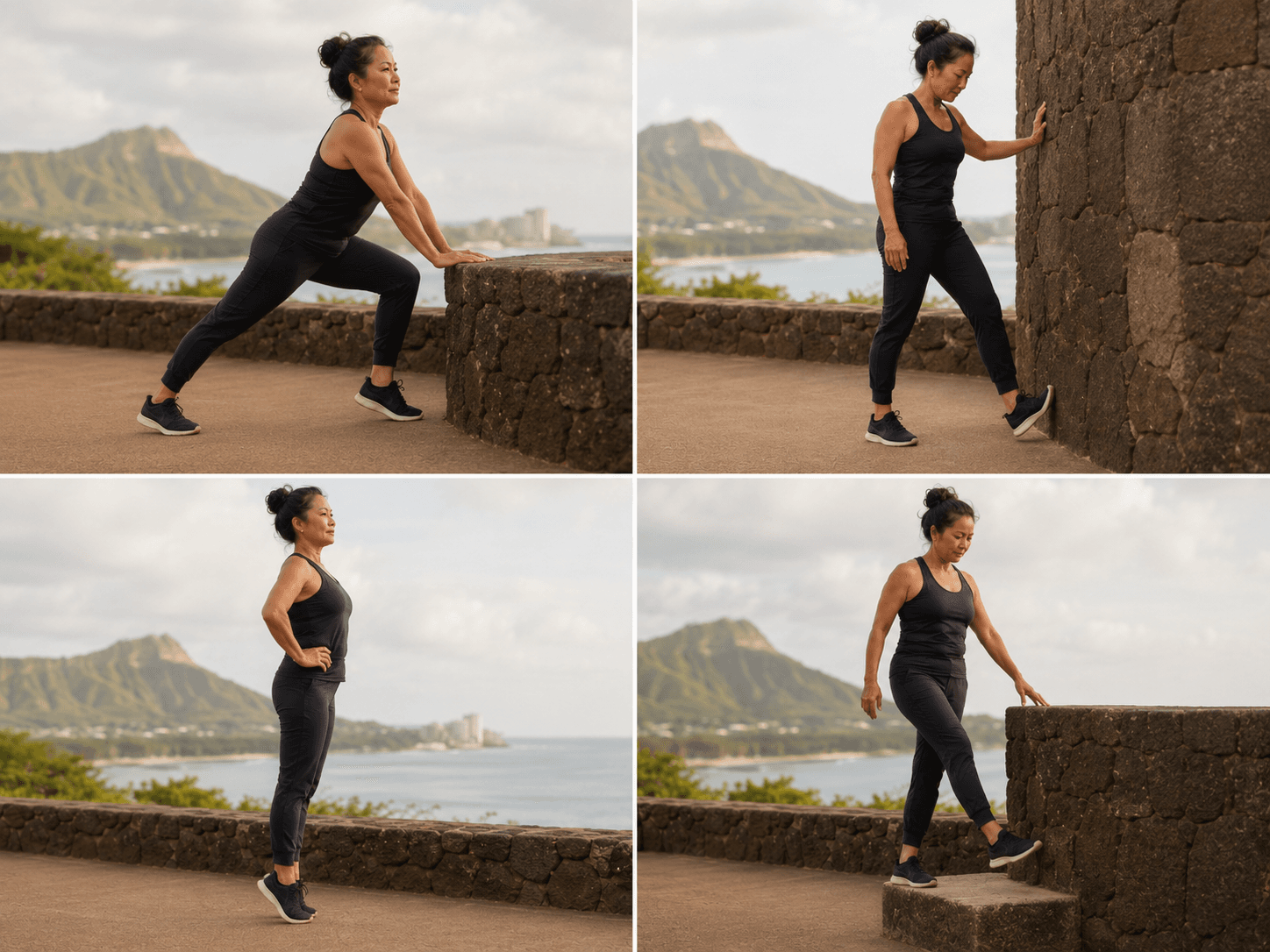
The exact choice depends on the person, the task, and any existing injury or health condition. This is general education, not an individualized exercise prescription.
What the Experts Are Actually Saying
Different experts use the word mobility differently. Their frameworks should not be blended together or presented as universal scientific consensus.
What This Means for You
Stretching can help. Keep it when it feels useful and supports what you want to do.
But do not judge your movement only by how far you can reach while relaxed on a mat. Ask a few more questions:
- Can I reach the position under my own control?
- Can I breathe normally there?
- Can I produce force there?
- Can I return slowly?
- Can I balance?
- Can I use the range during an everyday task?
- Can I respond when the movement does not go exactly as planned?
That is where flexibility starts becoming capability.
You don’t just need access to the range. You need the ability to use it.
Stretch to explore it. Move to understand it. Strengthen it so you can depend on it. Practice it in the life you actually live.