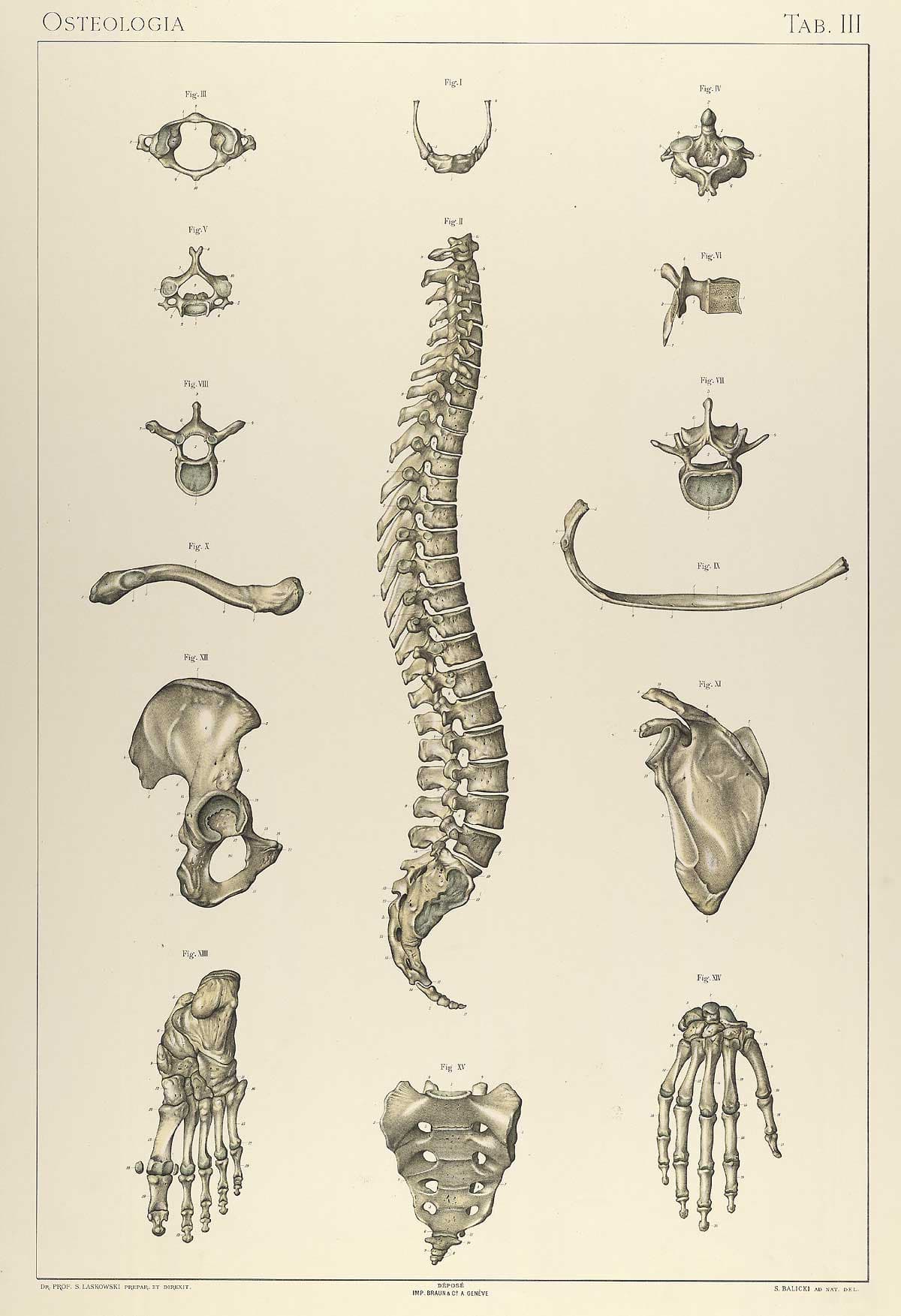
Your spine is 33 vertebrae stacked in curves, not a straight line — those curves are what let it absorb load instead of just transferring it straight down. When one section stiffens or loses its ability to move well, the sections above and below usually end up paying for it. The spine is the central structure everything else hangs on and organizes around — fascia, muscles, and the nervous system all interact with it constantly.
Regions, Curves, and Discs
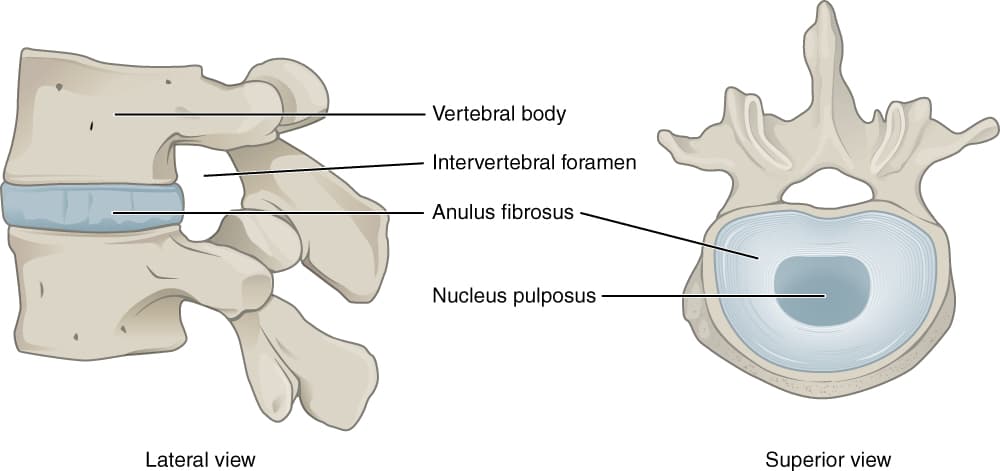
The adult spine is organized into regions:
- 7 cervical vertebrae (neck)
- 12 thoracic vertebrae (mid-back, rib attachments)
- 5 lumbar vertebrae (low back)
- Sacrum and coccyx (fused)
It has natural curves: cervical and lumbar curves go one way, thoracic and sacral curves go the other. These curves are not problems — they are load-sharing features. When the curves flatten, reverse, or become rigid in one area, the body often compensates somewhere else.
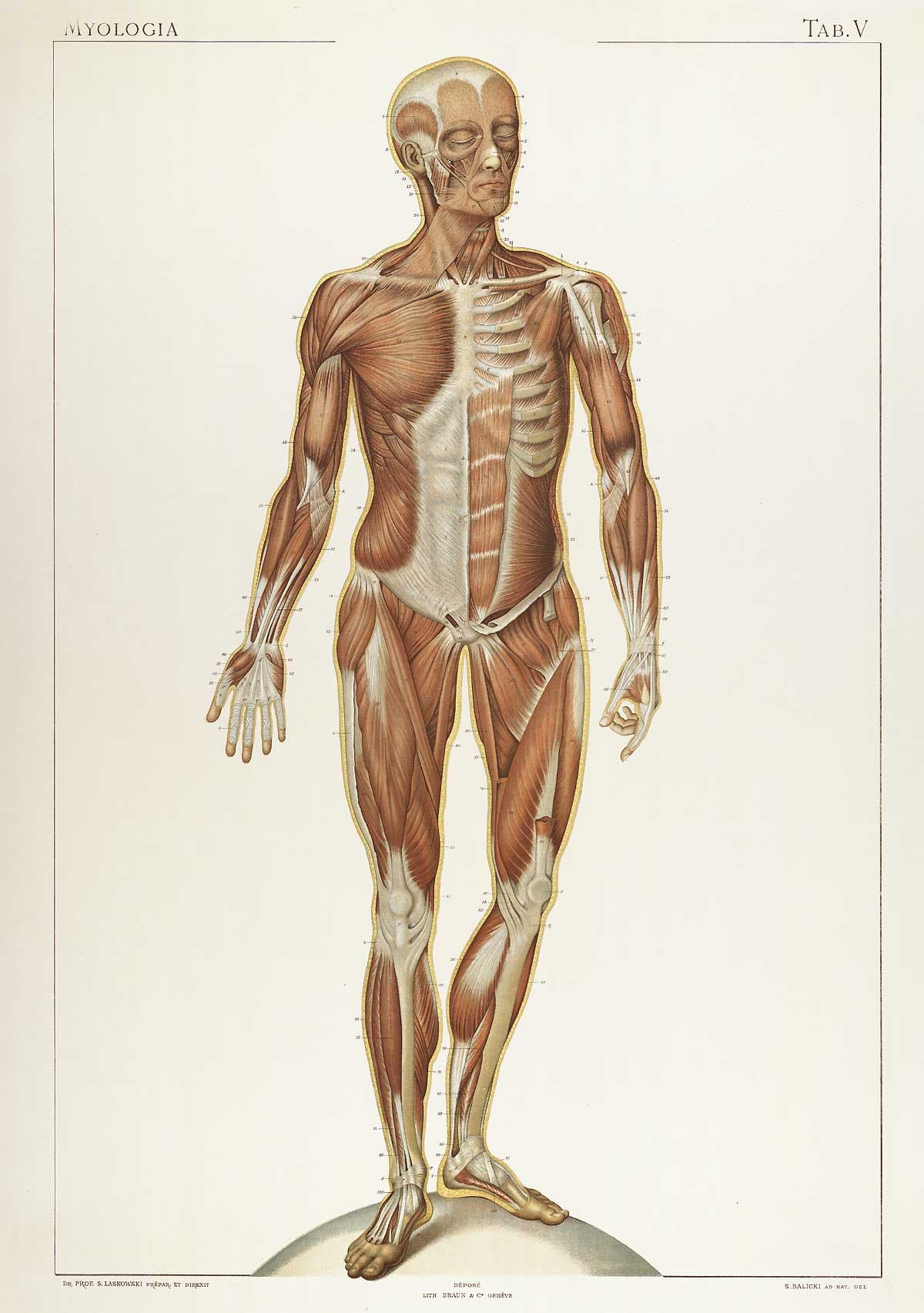
The intervertebral discs sit between most vertebrae and help with shock absorption and movement. The whole column is supported and moved by layers of muscles and wrapped in fascia that help transfer force and maintain organization.
The Spine as a Central Organizer
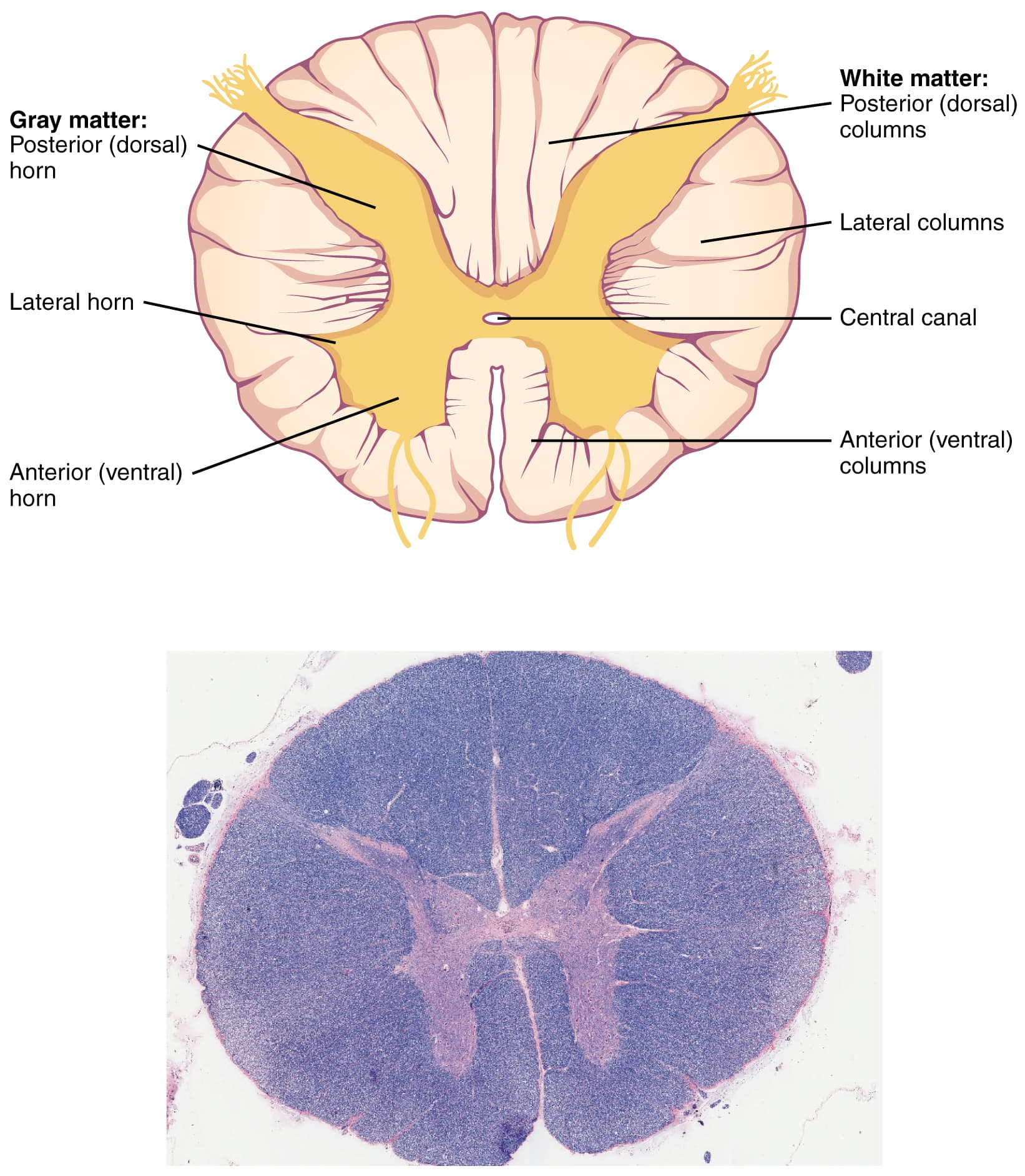
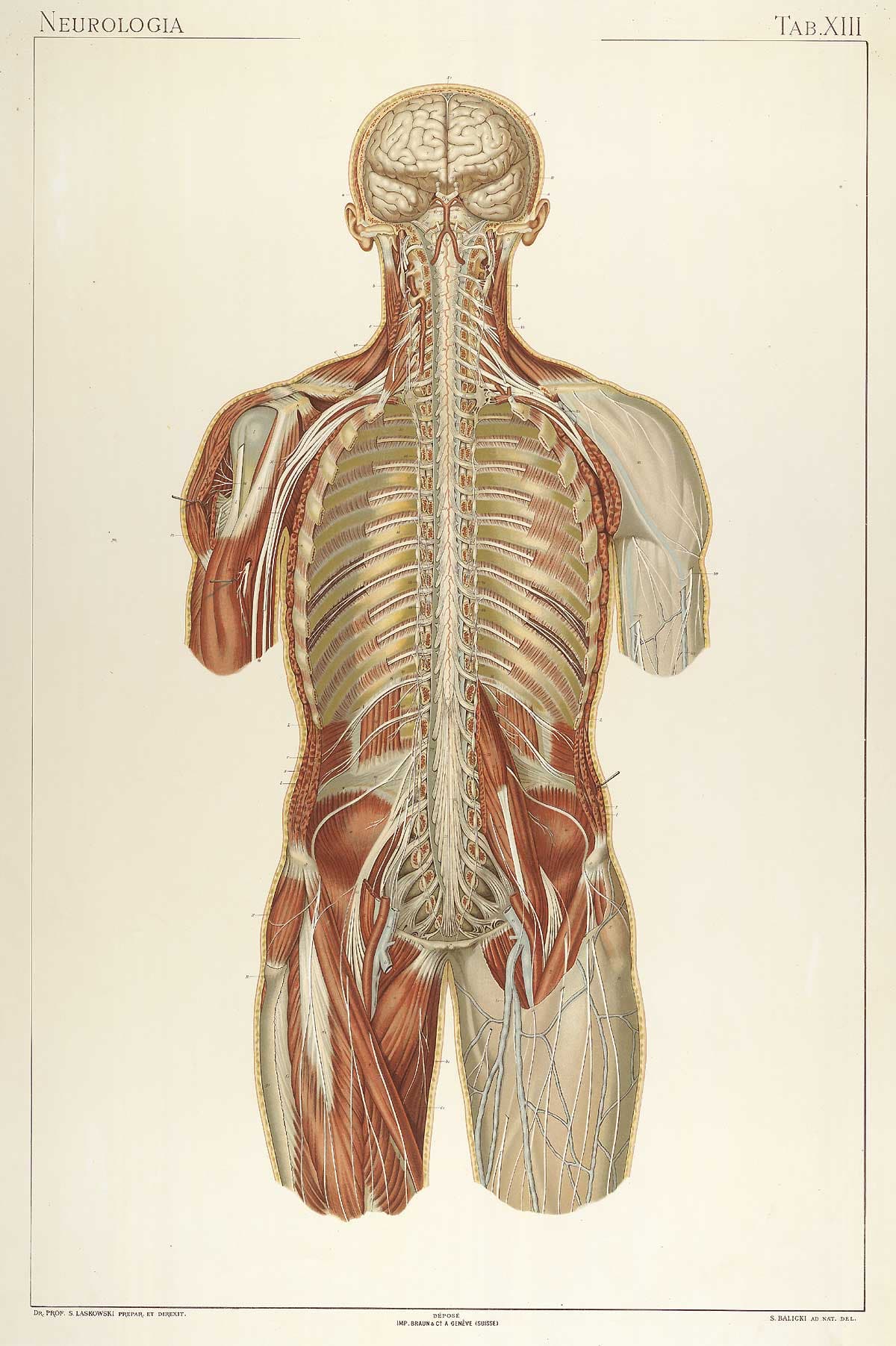
Because the spine is continuous and highly connected to the fascial and muscular systems, restriction or loss of good movement in one region rarely stays isolated. The nervous system is also heavily involved — the spinal cord runs through the vertebral canal and spinal nerves exit at each level, carrying signals that influence muscle tone, sensation, and coordination throughout the body.
This is one reason people can feel “tugged,” uneven, or limited in places that seem unrelated to where they first noticed a problem. Improving the quality of movement, recovery, and load distribution across the system tends to help the spine function as part of a more capable whole rather than as an isolated structure that needs to be “fixed.”
- We are not diagnosing spinal conditions or offering treatment.
- We are helping people understand the spine as a central organizing structure that works with fascia, muscles, and the nervous system.
- The practical goal is greater capability and better self-understanding over time.