
People usually notice strength loss late.
Not when it first begins.
Not when a small decline starts.
Usually later — when jars feel harder to open, bags feel heavier, stairs feel less steady, or getting up from the floor takes more effort than it used to.
That is part of why simple baseline tests matter.
Grip strength is not a magic number, and it does not explain everything. But it is one of the easiest ways to get a quick signal about physical capability.
A hard squeeze can tell more than most people expect.
That is why grip strength is the first test in the DIY Body Lab Mark on the Wall assessment.

What Grip Strength Actually Measures
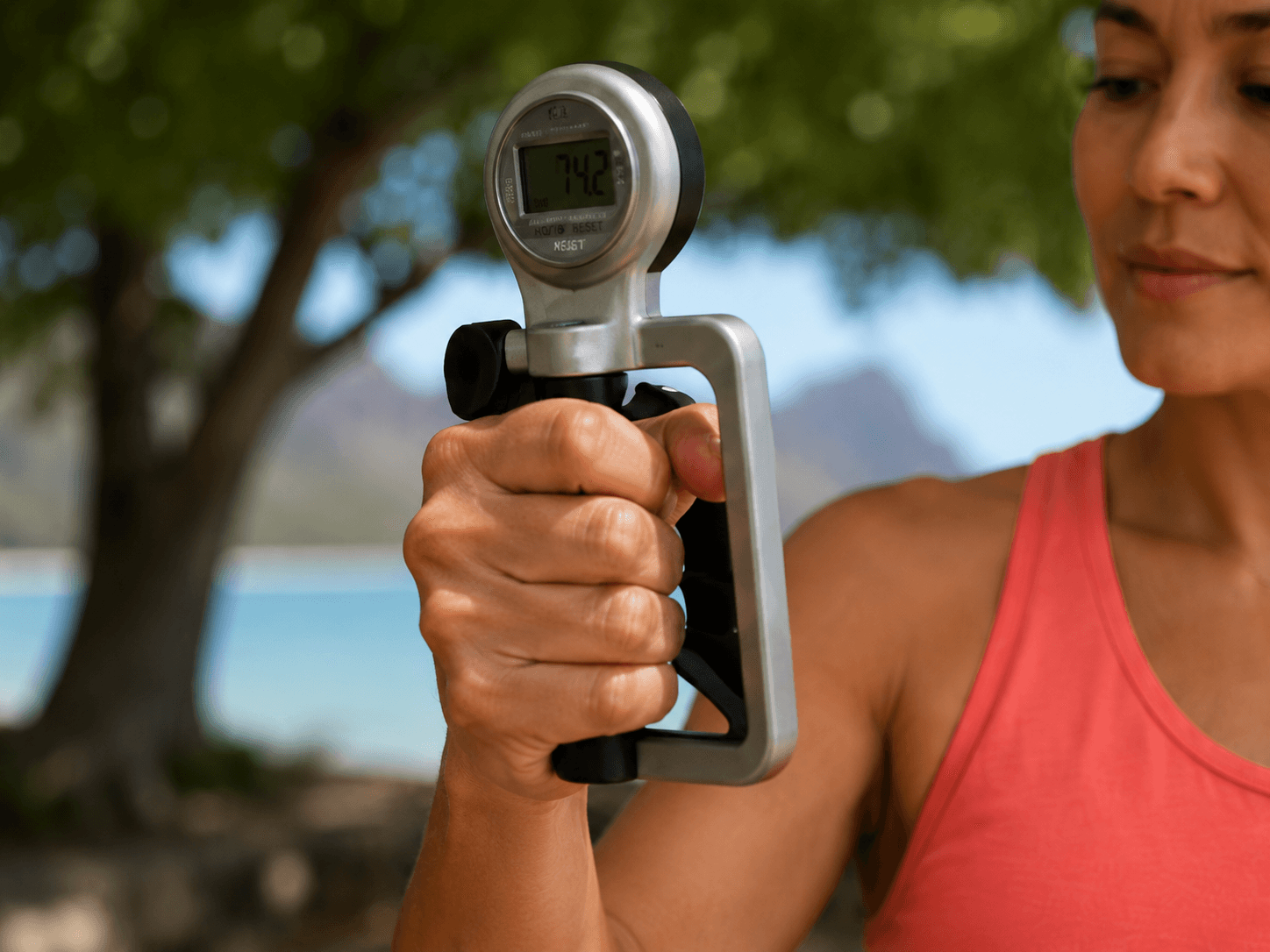
Grip strength is exactly what it sounds like: how much force a person can produce when squeezing with the hand.
It is usually measured with a handheld device called a dynamometer.
On the surface, that sounds like a hand test.
And it is.
But it is often useful because it reflects more than hand muscles alone. Grip strength can act as a rough snapshot of things such as:
- General strength
- Muscle function
- Nervous-system drive
- Physical reserve
- Aging-related change
- Overall capability
That does not mean the hand controls the whole body.
It means that a simple, repeatable test can sometimes give a surprisingly good clue about what is happening more broadly.
DIY Body Lab uses grip strength this way:
Not as a diagnosis. Not as a verdict. As a signal.
A signal that may be worth paying attention to.
Where Grip Strength Shows Up in Real Life
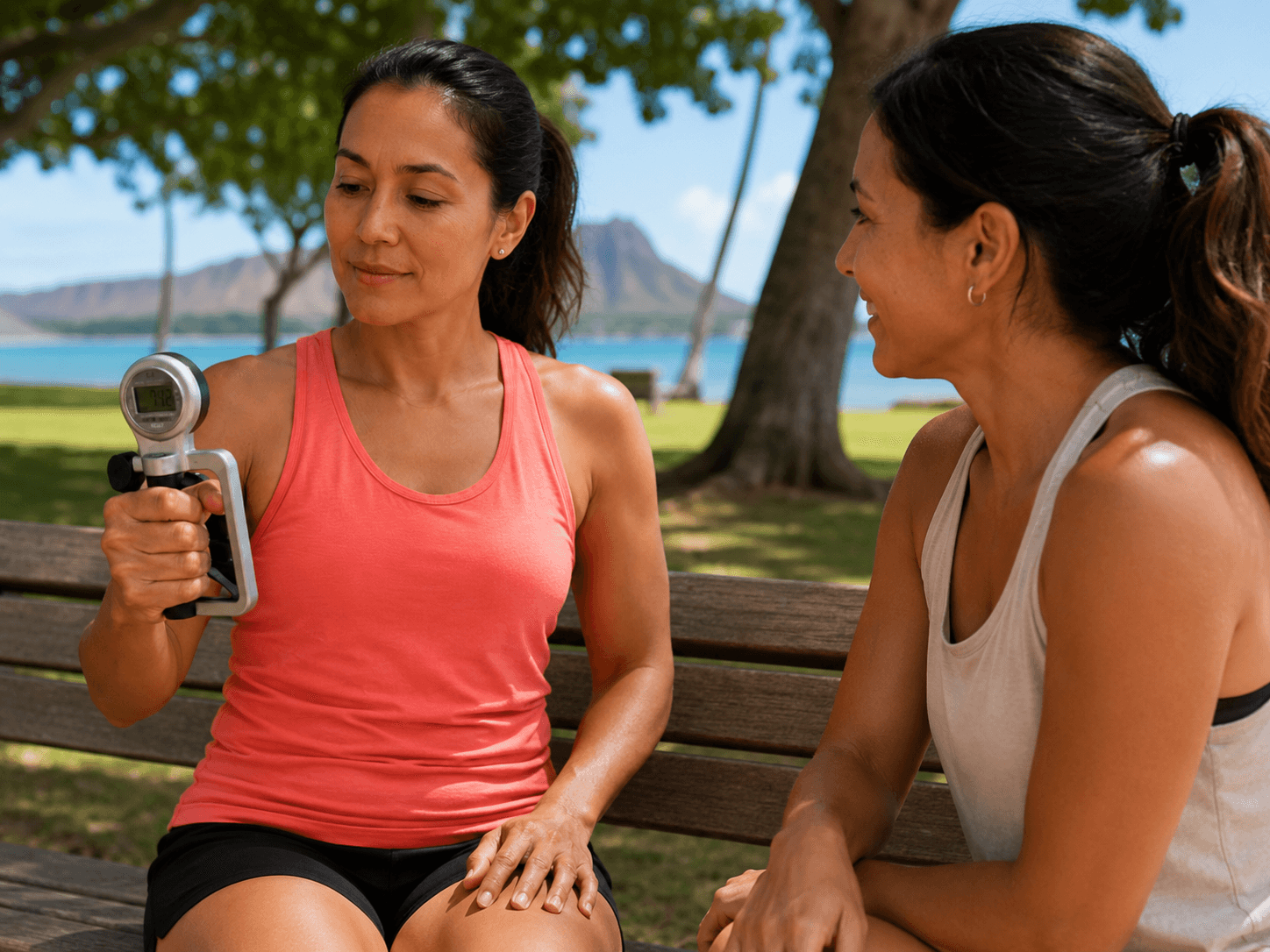
Grip strength matters because the body is not tested only in a gym.
It gets tested in ordinary life:
- Carrying groceries
- Pulling a suitcase
- Opening containers
- Using tools
- Holding a paddle
- Carrying a child
- Catching yourself on a railing
- Rising from the floor
- Managing work, chores, and everyday tasks
Strong hands do not guarantee whole-body health.
But weak grip — especially when it has dropped over time — can be a sign that strength, resilience, or function may not be where a person wants it to be.
That is why researchers and clinicians often use grip strength as a quick screening measure, especially in aging, function, frailty, and recovery settings.
It is fast.
It is low-tech.
It is repeatable.
And it gives a person a number they can track.
That last part matters.
What gets tracked can get noticed.
What gets noticed can get improved.
What the Research Says
Grip strength shows up again and again in research because it is practical and because it often correlates with outcomes people care about.
Research has linked lower grip strength with poorer physical function, greater frailty, slower mobility, and higher risk for important health outcomes.
Grip strength is also built directly into major sarcopenia frameworks. The revised European consensus on sarcopenia uses low muscle strength — commonly assessed with grip strength — as a primary sign that deserves attention. (PubMed)
Across aging and rehab settings, grip strength is widely used because it is simple, inexpensive, and informative.
Research on normative data also helps put a score into context by comparing it with age- and sex-based reference values rather than treating one number as universally good or bad. (PubMed)
Core Takeaways From the Evidence
Grip strength is useful because it is simple. It is quick, low-cost, and easy to repeat.
Grip strength often reflects more than the hands. It can act as a rough stand-in for wider physical capability and reserve.
Low grip strength gets attention for a reason. It is associated with outcomes tied to function, frailty, and aging.
A grip score is a starting point, not the whole story. One number should be understood alongside age, sex, training history, symptoms, goals, and the rest of the assessment.
What This Means for You
A grip-strength number can be useful for the same reason a mark on the wall is useful for a growing kid.
It gives a person something concrete.
Instead of guessing whether strength is slipping, a person can check.
Instead of relying only on how things feel, a person can measure.
Instead of waiting until problems are obvious, a person can track changes earlier.
That is the value.
Not because grip strength answers everything.
Because it gives useful information quickly.
In practical terms, a person can use grip strength to:
- Establish a baseline
- Compare left and right
- Watch for decline
- Track improvement
- Spot when overall strength work may be needed
- Put another data point next to balance, getting off the floor, and sit-to-stand ability
A lower-than-expected score is not a reason to panic.
It is a reason to pay attention.
And a better score over time is not just about stronger hands. It may reflect broader improvement in strength, confidence, training tolerance, and overall capability.
In plain English:
Grip strength gives the body a number — and numbers can help reveal the changes people do not notice day to day.