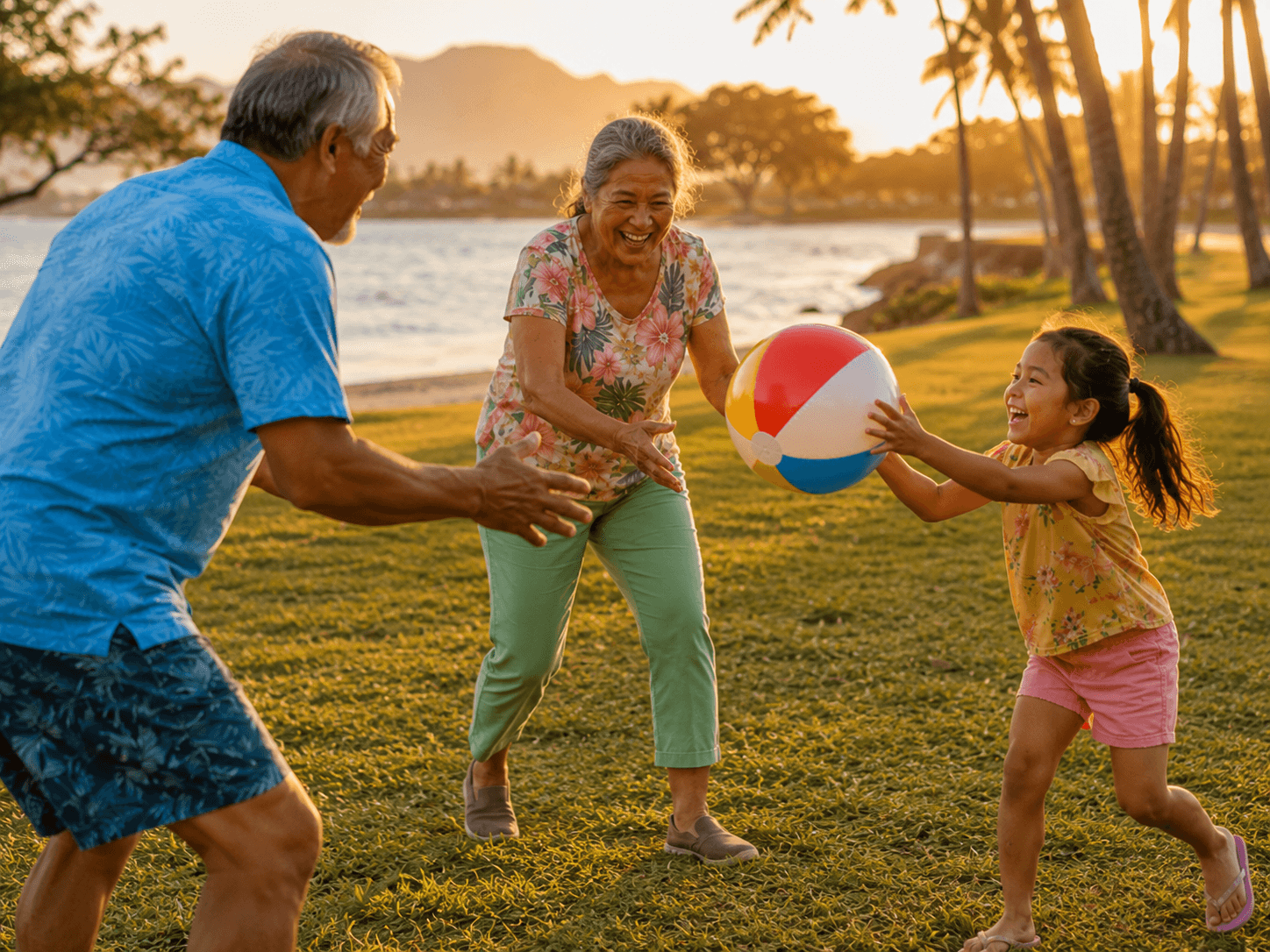
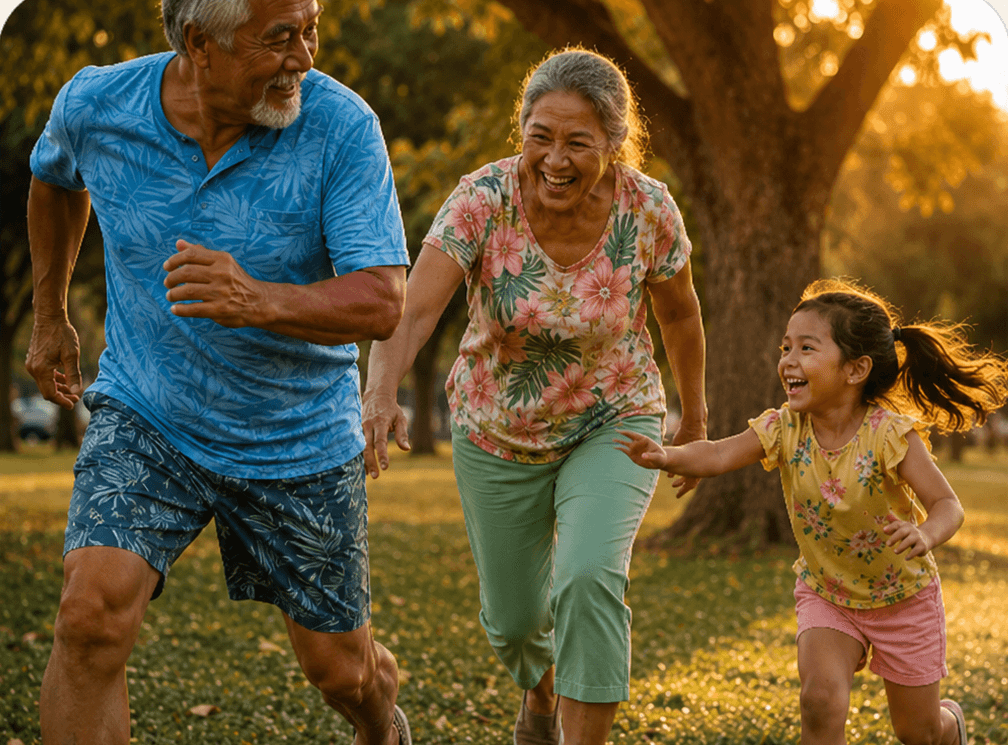
A lot of people hear the word fitness and picture gyms, races, or workouts.
But most of life does not happen there.
Life happens in driveways.
In kitchens.
On stairs.
At the store.
In the yard.
At the beach park.
On the floor with kids or grandkids.
That is where capability shows up.
It shows up when a person can carry bags in one trip.
When getting down and back up does not require a strategy meeting.
When a quick step catches a stumble before it becomes a fall.
When there is still enough energy left at the end of a busy day to enjoy the evening.
That is real function.
And for most people, it matters far more than chasing some perfect image of “fitness.”

What Capability Actually Means
DIY Body Lab uses the word capability in a simple way:
Can the body do what life asks of it?
That includes:
- Strength
- Balance
- Coordination
- Mobility
- Endurance
- Confidence
- Recovery
- Resilience
Not in theory.
In real life.
A capable body does not have to be the strongest body in the room.
It is a body that can handle ordinary demands with less struggle and more reserve.
That may mean:
- Walking with confidence
- Climbing stairs without dreading them
- Standing for longer
- Carrying everyday loads
- Moving down to and up from the floor
- Getting through the day with something left in the tank
DIY Body Lab is not built around looking impressive.
It is built around being useful.
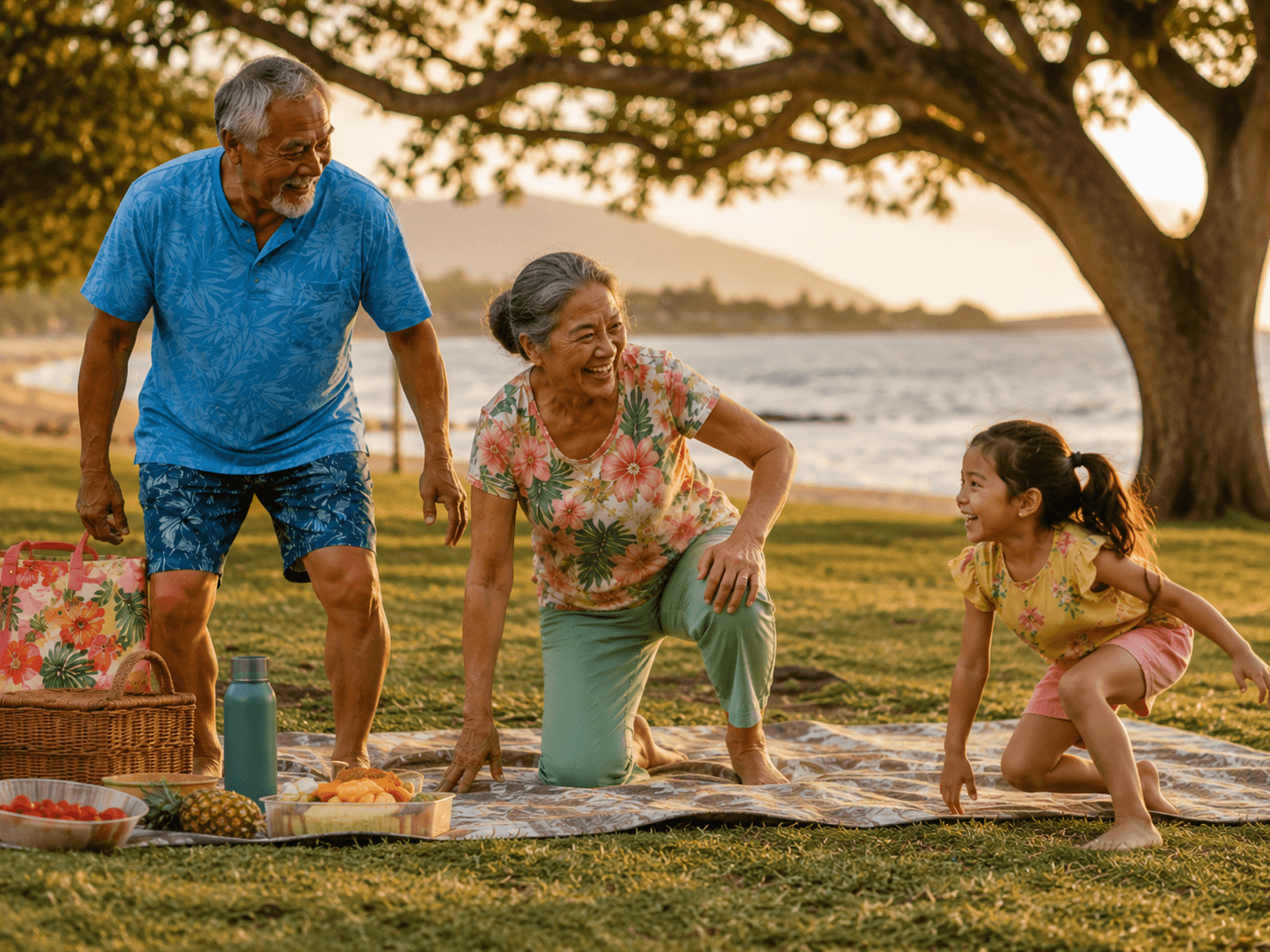
Where This Shows Up in Real Life
Daily life has physical demands whether people train for them or not.
The body is constantly being asked to:
- Reach
- Bend
- Step
- Lift
- Carry
- Balance
- Push
- Pull
- Recover
A person does not need to be an athlete to feel the difference between being capable and not feeling capable.
It becomes noticeable when:
- A curb starts to feel uncertain
- Stairs feel harder than they should
- Getting off the floor becomes awkward
- Carrying groceries taxes the hands, shoulders, or back
- Playing with family gets tiring too quickly
- Activities that once felt automatic begin getting avoided
That is why everyday life is a real performance setting.
Not a lesser one.
A real one.
And for most people, improving that kind of performance is one of the most meaningful things training can do.
What the Research Says
Research on healthy aging, physical function, and exercise keeps pointing toward the same broad idea:
Basic physical capacity matters.
A systematic review and meta-analysis found that objective measures such as grip strength, walking speed, chair-rise performance, and standing balance were associated with important long-term outcomes in community-dwelling populations. These tests do not define a person, but they can provide useful information about physical reserve and function. (PubMed)
The National Institute on Aging explains that physical activity can improve physical function and make daily tasks — including household chores, getting into or out of a chair or bed, and moving through the neighborhood — easier to perform. (NIA)
The World Health Organization recommends that older adults combine aerobic activity, muscle-strengthening work, and activities that emphasize balance and functional ability. (WHO)
The current CDC guidance follows the same multicomponent idea: aerobic activity, muscle strengthening, and balance all contribute to physical function and reduced fall risk. (CDC)
Strength is trainable. A large systematic review and network meta-analysis covering 151 randomized trials found that resistance training can improve physical function, strength, and related measures in adults aged 60 and older. (PubMed)
Another systematic review found that community-based resistance training improved walking distance, lower-extremity strength, and usual walking speed in older adults with mobility limitations. (PubMed)
Even uncomplicated tools can help. A systematic review of elastic-resistance training found improvements across tests including sit-to-stand, timed up-and-go, grip strength, walking capacity, and the Short Physical Performance Battery. (PubMed)
Core Takeaways From the Evidence
Strength supports everyday function. Standing, carrying, climbing, and getting up all require force.
Balance and coordination matter. Capability is not just how much force the body can produce, but whether it can control that force when life gets unpredictable.
Simple physical tests can be useful. Grip strength, chair rises, walking speed, and balance tests provide practical signals that can be tracked over time.
Physical function can improve. Capability is not frozen at a particular age. Appropriate, consistent activity can improve strength and functional performance.
The parts work together. Aerobic capacity, strength, balance, mobility, and recovery all contribute to the body's ability to handle daily life.
What This Means for You
A lot of people do not need a more extreme fitness plan.
They need a more useful one.
That means paying attention to the abilities that actually carry over into life:
- Can I carry what I need to carry?
- Can I get down and back up?
- Can I climb stairs confidently?
- Can I keep my balance?
- Can I move without feeling fragile?
- Can I stay active with the people I care about?
- Can I recover well enough to do it again tomorrow?
That is where simple assessments can help.
Not because they define a person.
Because they reveal a starting point.
When grip strength, balance, sit-to-stand ability, walking confidence, or getting off the floor improves, that improvement usually means something real.
Life may feel easier.
Confidence may return.
The body may have more options.
There may be more room for hiking, traveling, working, playing, helping family, or saying yes to something that previously felt like too much.
In plain English:
The goal is not to train for a fantasy version of life. The goal is to be ready for the real one.